
seasonal
What Is Aquaplaning, and How Do You Avoid It?
What is aquaplaning, why it happens without warning, and the three things that decide whether it happens to you. Two of them are under your control.
8 min read
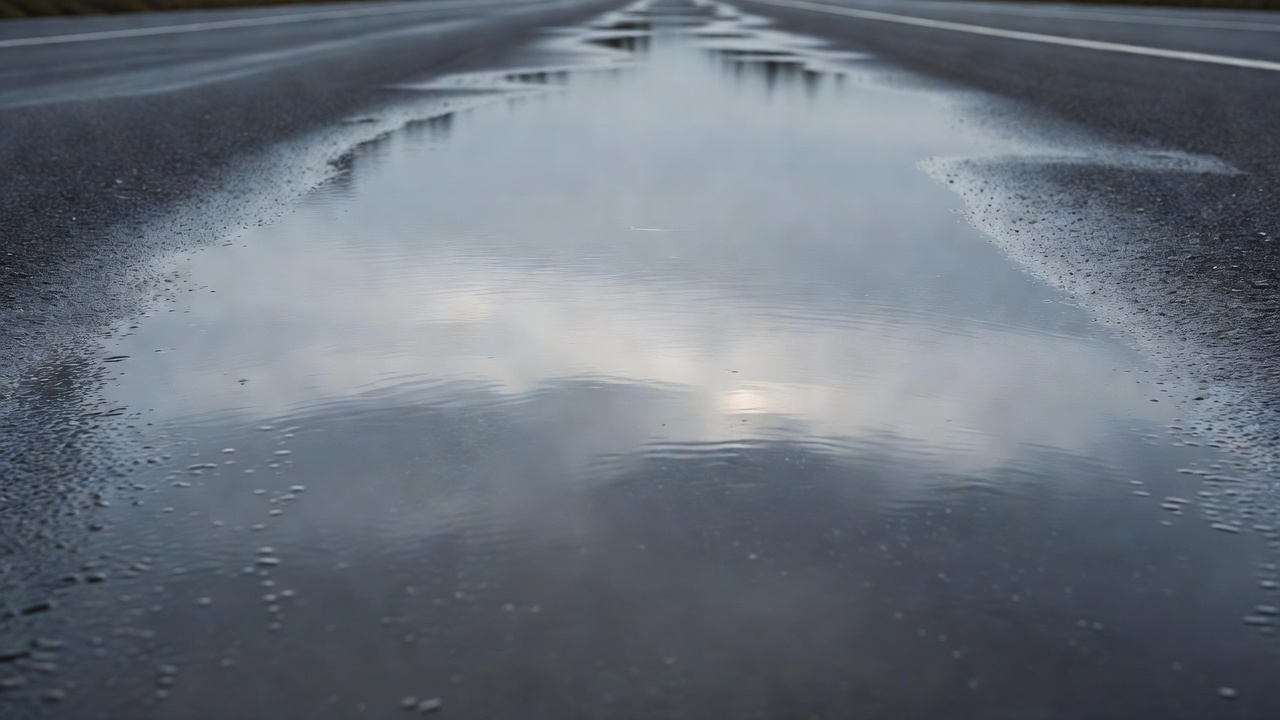
It happens in about a second. The steering goes light, the engine note changes slightly, and for a moment the car is not really connected to the road at all.
What is aquaplaning, in plain terms: the tyre has met more water than it can clear, so it rides up onto a film of water instead of touching the tarmac. Steering, braking and acceleration all stop working at once, because all three depend on contact that has momentarily gone.
Why it happens
A tyre's grooves exist to move water out of the way. At speed, the tyre has only a fraction of a second to clear the water ahead of the contact patch and put rubber on road.
Beyond a certain combination of speed, water depth and remaining tread, the tyre simply cannot pump water fast enough. The water builds a wedge ahead of the contact patch, lifts the tyre, and the contact is lost. That is aquaplaning.
It matters that this is a threshold rather than a gradual decline. Grip is largely normal, and then it is gone. There is very little warning, which is why the answer is prevention rather than technique.
The three variables
Only three things decide whether it happens, and you control two of them.
- Speed. The dominant factor by a distance, because the time available to clear water falls as speed rises. Slowing meaningfully is the single most effective thing you can do.
- Tread depth. A tyre near the legal minimum has a fraction of the water-clearing capacity of a new one. This is where the gap between legal and good is widest.
- Water depth. Not under your control, but avoidable: standing water collects in ruts, at the edges of lanes and in dips, and those are visible if you are looking.
Tyre pressure plays a part too. An underinflated tyre distorts and its grooves do not sit as designed, which reduces how effectively it clears water.
Where standing water actually sits
Roads are built to drain, and where drainage fails is fairly predictable once you know what to look for.
Ruts worn into the lanes by heavy traffic hold water, which is why the wheel tracks are often worse than the space between them. Water gathers at the nearside edge where camber sends it, and in dips under bridges and at the bottom of hills. On a motorway in heavy rain, the outside lane is frequently the driest simply because it carries less rutting.
Spray from the vehicle ahead is also a signal. Heavy spray means standing water rather than merely wet tarmac, and the sensible response is to back off well before you reach it.
What to do if it happens
Everything about the correct response is counterintuitive, which is why it is worth reading before you need it.
- Do not brake. There is no grip to brake with, and it will simply lock the wheels or trigger the anti-lock system to no effect.
- Do not steer sharply. If the wheels are not pointing where the car is going when grip returns, that is when it becomes a spin.
- Ease off the accelerator smoothly rather than lifting abruptly.
- Hold the steering straight, or as close to straight as the road allows, and wait.
- Grip usually returns within a second or two as the car slows. Then, gently, do what you need to do.
The whole technique is restraint. Almost every aquaplaning incident that ends badly does so because of what the driver did during it, not because of the aquaplaning itself.
Modern safety systems will not save you
Worth stating plainly, because a lot of drivers assume otherwise. Anti-lock brakes, stability control and four-wheel drive all work by managing grip.
During aquaplaning there is effectively no grip to manage, so none of them can help. Four-wheel drive in particular gives an unhelpful false confidence: it improves getting moving on a slippery surface and does nothing whatsoever for stopping or steering on water.
The only thing that helps is the tyre, and specifically its ability to clear water. That is bought with tread depth and with speed.
Tyres and the legal minimum
This is the single most useful practical takeaway. The legal minimum tread depth is a limit for prosecution, not a standard for wet performance.
Water clearance falls away long before a tyre reaches that limit, and it falls fastest in the last portion of the tread's life. A tyre that is perfectly legal can have dramatically less resistance to aquaplaning than the same tyre when new, and the driver has no way of feeling that difference on a dry road.
It is why plenty of people replace before the limit, and why wet grip is the rating on the tyre label worth paying attention to. Neither is caution for its own sake; both buy the specific thing that stops this happening.
Driving in heavy rain generally
A few habits that cost nothing.
Slow down before you need to rather than reacting. Increase the gap ahead considerably, because stopping distances lengthen a great deal in the wet. Use dipped headlights so you can be seen through spray, and switch off cruise control, which can respond to a loss of traction in ways you would not choose.
And check your tread before the wet season rather than during it. Everything on this page comes back to a tyre being able to move water, and that is decided long before it rains.
Common questions
What is aquaplaning?
It is when a tyre meets more water than it can clear, so it rides up on a film of water instead of touching the road. Steering, braking and acceleration stop working simultaneously because all three depend on contact that has momentarily been lost.
What should you do if your car aquaplanes?
Do not brake and do not steer sharply. Ease off the accelerator smoothly, hold the steering straight, and wait for grip to return as the car slows. Almost every incident that ends badly does so because of what the driver did during it.
Does tread depth affect aquaplaning?
Enormously. The grooves are what move water out of the way, so a tyre near the legal minimum has a fraction of the water-clearing capacity of a new one. The legal minimum is a limit for prosecution, not a standard for wet performance.
Do ABS and four-wheel drive help with aquaplaning?
No. All those systems work by managing available grip, and during aquaplaning there is effectively none to manage. Four-wheel drive is the most misleading of them, because it helps with moving off on a slippery surface and does nothing for stopping or steering on water.
What speed does aquaplaning happen at?
There is no single figure, because it depends on the combination of speed, water depth and remaining tread. What is consistent is that speed is the dominant factor, so slowing meaningfully is the most effective thing you can do in heavy rain.
Read more like this
seasonal
Driving in Snow and Ice: The Techniques That Actually Work
Driving in snow and ice is mostly about doing everything earlier and more gently. Here is what genuinely helps, and what four-wheel drive does not do.
seasonal
How to Get Your Car Ready for Winter, Without Overdoing It
How to get your car ready for winter: the few checks that genuinely matter, in the order worth doing them, and the things people worry about that do not.
seasonal
What to Do If You Break Down, in the Order That Keeps You Safe
What to do if you break down: the first thirty seconds matter most, and the instinct to stay in the car is right in some places and wrong in others.
Need tyres or a service?
Search by registration or size, compare fitted prices from local specialists, and book with the price locked in.
Find tyres