
Servicing
Prix d'une révision : d'où vient le montant
Le prix d'une révision varie du simple au triple pour la même voiture. Ce qui change, ce n'est pas la marge, c'est ce qu'il y a dedans.
9 lecture min
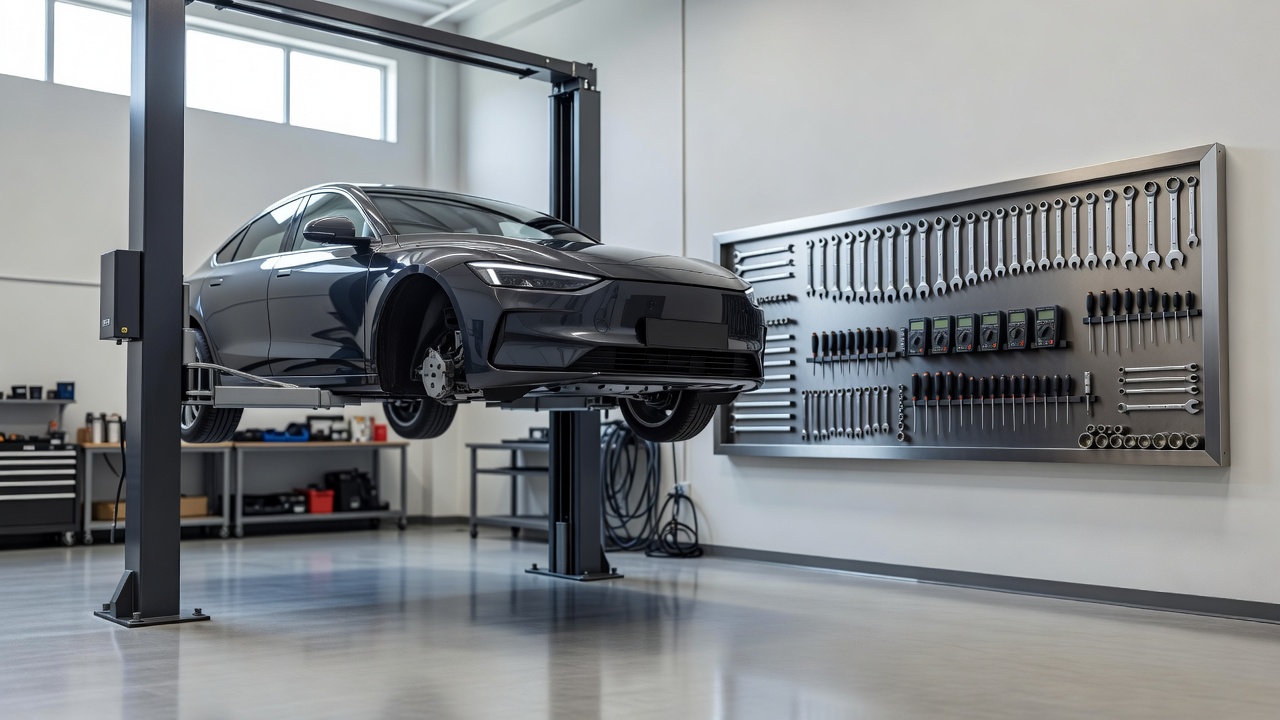
Vous demandez trois devis pour la même voiture et vous obtenez trois montants qui n'ont visiblement rien à voir. La tentation est d'en conclure que l'un des trois exagère.
C'est rarement le cas. Le prix d'une révision varie surtout parce que le mot révision ne désigne pas la même chose d'un atelier à l'autre, et comparer trois chiffres sans savoir ce qu'ils recouvrent revient à comparer trois paniers sans regarder dedans.
Ce que le mot recouvre
Il n'existe pas de définition réglementaire de la révision. Chaque constructeur publie un plan d'entretien, et chaque atelier propose ses propres formules autour de ce plan.
- Une vidange simple : huile, filtre à huile, contrôle visuel. C'est le montant le plus bas et ce n'est pas une révision.
- Une révision intermédiaire : la vidange plus les filtres à air et d'habitacle, les niveaux, les points de contrôle courants.
- Une révision complète, dite grande révision : la précédente plus le filtre à carburant, les bougies sur un moteur essence, et davantage de points contrôlés.
- Le plan constructeur à l'échéance concernée, qui ajoute ce que le carnet exige à ce kilométrage précis.
Un devis bas et un devis élevé peuvent donc être également honnêtes, et décrire deux prestations différentes. La première question à poser n'est pas combien, mais ce qui est inclus.
Ce qui fait vraiment varier le montant
- Le taux horaire, qui change nettement entre un réseau constructeur, un réseau d'enseigne et un garage indépendant, et selon la région.
- Le temps barémé pour votre véhicule : certains moteurs demandent une dépose pour accéder à ce qu'un autre laisse à portée de main.
- La qualité et l'origine des pièces, d'origine constructeur ou équivalentes.
- La quantité et la norme de l'huile : cinq litres d'une huile à norme spécifique coûtent bien davantage que quatre litres d'une huile courante.
- Ce qui est découvert en cours d'intervention et qui n'était dans aucun devis.
Le deuxième point explique la majorité des écarts entre deux modèles de prix d'achat comparable, et il n'apparaît nulle part dans une grille tarifaire. Il se demande à l'avance, véhicule par véhicule.
Réseau constructeur ou garage indépendant
Le réseau constructeur applique un taux horaire plus élevé, travaille avec des pièces d'origine et dispose des outils de diagnostic spécifiques. Sur un véhicule récent, sous garantie ou susceptible d'un geste commercial, cela pèse.
Un garage indépendant sérieux entretient selon le plan constructeur avec des pièces de qualité équivalente, et la garantie reste acquise dès lors que le travail est fait selon les préconisations et documenté. La différence de facture est réelle et parfaitement légitime.
Le raisonnement change avec l'âge du véhicule. Sur une voiture de deux ans encore sous garantie, le réseau se défend. Sur une voiture de dix ans, ce qui compte est que le travail soit fait correctement et prouvé, pas le logo sur la facture.
Les questions qui rendent un devis comparable
Quatre questions transforment trois chiffres incomparables en trois offres que l'on peut mettre côte à côte.
- Quelles opérations sont incluses, ligne par ligne, et lesquelles sont des contrôles plutôt que des remplacements ?
- Quelle huile, quelle quantité et quelle norme constructeur ?
- Quelles pièces, d'origine ou équivalentes, et de quelle marque ?
- Que se passe-t-il si quelque chose est découvert : m'appelez-vous avant d'engager la dépense ?
La dernière est la plus importante et la moins posée. Un accord explicite sur le fait de vous appeler avant tout supplément évite la conversation désagréable au moment de payer, et un atelier sérieux la donne sans hésiter.
Ce qui n'est presque jamais compris dedans
Certaines lignes arrivent en supplément et surprennent parce qu'elles semblent faire partie de l'entretien courant.
Le liquide de frein, dont le remplacement est en général biennal, la courroie de distribution avec son kit et souvent la pompe à eau, l'huile de boîte sur les véhicules qui en demandent, les plaquettes et disques qui sont des pièces d'usure et non d'entretien, et la climatisation dont l'entretien est une prestation distincte.
Aucune de ces lignes n'est un abus. Elles ne relèvent simplement pas de la même échéance, et les voir arriver ensemble une année donnée fait paraître la facture anormale alors qu'elle est seulement dense.
Ce qui coûte le plus cher, en réalité
Reporter. Une vidange repoussée d'un an coûte le prix de la vidange économisée et peut coûter bien davantage ; une courroie de distribution reportée peut coûter le moteur ; un liquide de frein jamais changé se paie sur un freinage un jour de pluie.
Rapporté au kilomètre, un entretien régulier chez un atelier honnête reste l'un des postes les plus modestes de la possession d'une voiture, loin derrière le prix d'une révision annuelle telle qu'on se la représente et très loin derrière la décote.
En pratique
- Regardez ce que le carnet exige à votre kilométrage, avant de demander quoi que ce soit.
- Demandez trois devis sur cette base précise, pas sur le mot révision.
- Comparez les lignes, pas les totaux.
- Vérifiez que l'huile respecte la norme du constructeur, et pas seulement la viscosité.
- Obtenez l'accord écrit qu'on vous appellera avant tout dépassement.
- Conservez la facture détaillée : elle vaut de l'argent à la revente.
Le dernier point se rentabilise seul. Un historique complet et prouvé se voit immédiatement dans le prix d'une voiture d'occasion, et il coûte simplement le fait de garder les papiers.
Questions fréquentes
Quel est le prix d'une révision ?
Il varie du simple au triple pour le même véhicule, parce que le mot révision n'a pas de définition réglementaire : une vidange simple, une révision intermédiaire et une grande révision recouvrent des prestations très différentes. La bonne question n'est pas combien, mais ce qui est inclus.
Pourquoi deux devis diffèrent-ils autant ?
Le taux horaire, le temps barémé pour votre moteur, l'origine des pièces, la quantité et la norme de l'huile, et ce qui est découvert en cours d'intervention. Le temps barémé explique la plupart des écarts et n'apparaît dans aucune grille tarifaire.
Garage indépendant ou réseau constructeur ?
Un indépendant sérieux entretient selon le plan constructeur avec des pièces équivalentes, et la garantie reste acquise si le travail est documenté. Le réseau se défend surtout sur un véhicule récent, sous garantie ou susceptible d'un geste commercial.
Qu'est-ce qui n'est pas inclus dans une révision ?
Le liquide de frein, la courroie de distribution et son kit, l'huile de boîte sur les véhicules concernés, les plaquettes et disques qui sont des pièces d'usure, et l'entretien de la climatisation. Ce ne sont pas des abus, simplement d'autres échéances.
Que demander avant d'accepter un devis ?
Les opérations incluses ligne par ligne, l'huile et sa norme, l'origine des pièces, et surtout l'engagement d'être appelé avant tout supplément découvert en cours d'intervention. Cette dernière question est la moins posée et la plus utile.
Lisez-en plus comme ceci
Diagnose it
Odeur de brûlé : ce que chaque odeur désigne
Une odeur de brûlé n'est pas un symptôme unique. Ce qui brûle a une odeur reconnaissable, et l'une d'elles impose de couper le moteur.
Buying and selling
Pro ou particulier : ce que la garantie légale change
L'écart de prix entre un professionnel et un particulier a un nom juridique. Savoir lequel change la façon d'arbitrer.
Tyres
Réparer un pneu crevé : quand c'est possible
Réparer un pneu coûte une fraction du prix d'un neuf, mais tout ne se répare pas. La zone compte plus que la taille du trou.
Besoin de pneus ou d'un service ?
Recherchez par immatriculation ou taille, comparez les prix montés des spécialistes locaux, et réservez avec le prix verrouillé.
Trouvez des pneus