
Buying and selling
Petrol, Diesel, Hybrid or Electric: Which Suits How You Drive?
Petrol, diesel, hybrid or electric? The right answer depends on your journeys and where you park, not on which technology is winning. Here is how to work it out.
9 lecture min
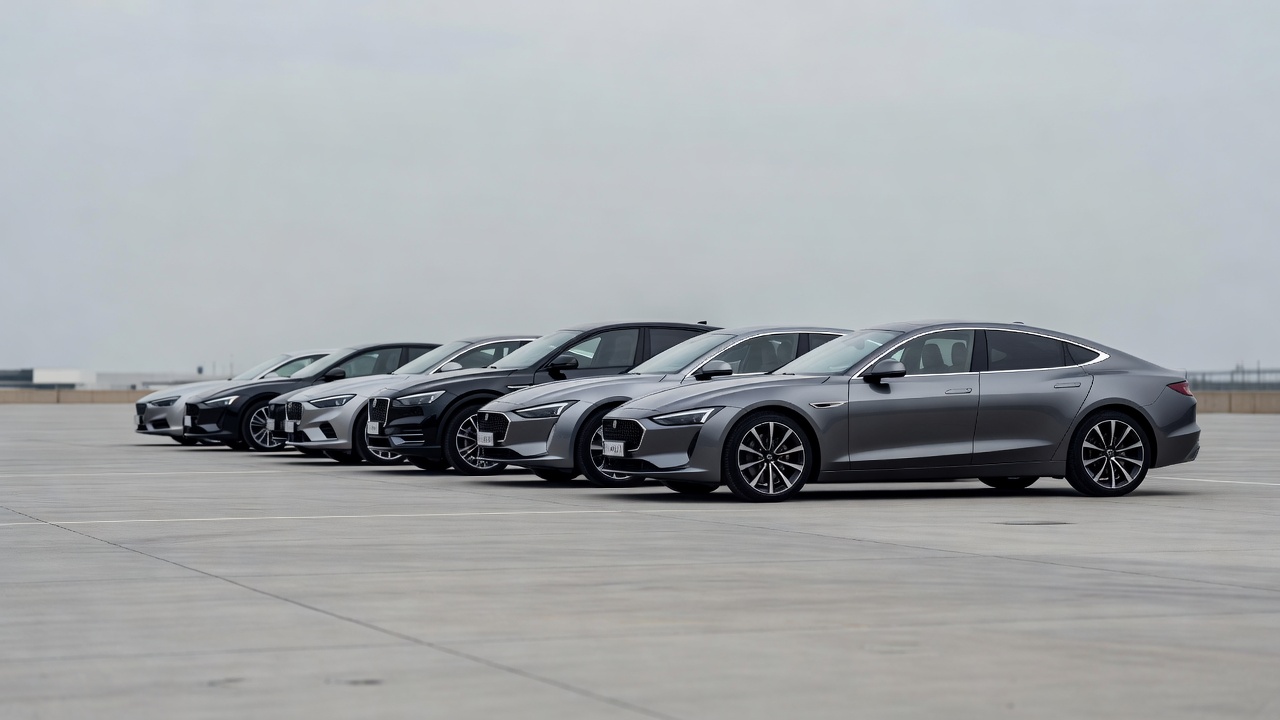
Every conversation about this turns into an argument about which technology is winning, which is the least useful way to decide. The car does not know what is winning. It only knows what you ask it to do.
Petrol, diesel, hybrid or electric is a question about your journeys, not about the future of transport. Three facts about your life decide almost all of it, and they take a minute to establish.
The three questions that decide it
- How long is a typical journey? Not the longest one you do twice a year. The one you do most days.
- How many miles a year do you actually cover? Check the last two inspection certificates rather than guessing; most people are wrong by a wide margin.
- Where does the car sleep? Off-street with power available, off-street without, or on the street.
Almost every genuinely bad car-buying decision comes from answering one of those three optimistically. People buy for the holiday rather than the commute, and then live with the commute.
Diesel: long journeys, high mileage, and not much else
Diesels are excellent at exactly one thing: covering long distances efficiently, especially with a load.
They are poor at short cold journeys, and the reason is the exhaust filter. It needs sustained running at temperature to burn off accumulated soot, and a car that never gets there keeps starting that process and keeps interrupting it. Over time that becomes a genuine, expensive problem, and it is the single most common regret among people who bought a diesel for town use.
So the rule of thumb is straightforward: high annual mileage, mostly longer runs, and towing or carrying weight all favour a diesel. Short local trips rule it out regardless of how good the economy figure looks on paper.
Petrol: the default that is hard to get wrong
Petrol is the answer when nothing else clearly fits, and there is no shame in that.
It handles short journeys without complaint, it is cheaper to buy than the equivalent hybrid or electric, the servicing is well understood and inexpensive everywhere, and there is no infrastructure question to answer. Modern small turbocharged petrol engines are also far more efficient than their reputation suggests.
The trade is fuel cost at high mileage. Above a certain annual distance the difference against a hybrid or an electric car starts to matter, and below it the extra purchase price never pays back.
Hybrid: the compromise that suits town driving
A conventional hybrid recovers energy under braking and uses it at low speed. That makes it best exactly where a diesel is worst: stop-start town driving, short journeys, traffic.
It needs no charging and no change in habits, which is its real appeal. On a long motorway run the benefit shrinks considerably, because there is little braking to recover from and the engine is doing most of the work anyway.
A plug-in hybrid is a different proposition and deserves an honest warning: it only makes sense if you will genuinely charge it. Driven on the engine with a flat battery it is a heavy petrol car carrying a battery for nothing, and its real-world economy in that state is poor. Charged nightly with a short commute it can be excellent. There is very little middle ground.
Electric: where you park decides it
For most people the deciding factor is not range and not price. It is whether you can charge at home.
With off-street parking and a home charger, an electric car is cheap to run, cheap to service and pleasant in exactly the traffic that makes other cars unpleasant. Charging happens while you sleep and the question of range mostly evaporates, because you start every day full.
Without home charging it is a different calculation. Public rapid charging costs considerably more per mile, it takes time you have to plan around, and relying on it is harder on the battery than slow charging. It is workable, plenty of people do it, but it should be a decision you make with your eyes open rather than one you discover afterwards.
The mistakes people actually make
- Buying a diesel for a five-mile commute because the economy figure looked good.
- Buying a plug-in hybrid with no intention of plugging it in.
- Buying an electric car without checking what charging at home would cost to install, or whether it is possible at all.
- Buying for the two-week holiday rather than the fifty other weeks.
- Assuming annual mileage is far higher than it is, and paying for efficiency that never repays.
The last one is worth checking rather than estimating. A great many people who believe they drive a lot are doing well under the mileage at which a more expensive efficient car pays for itself.
Running costs beyond fuel
Fuel is the number everyone compares and it is not the whole picture.
Electric cars have fewer moving parts and simpler servicing, but they are heavier, which means tyres wear faster and are a real running cost. Diesels carry the exhaust filter and, on modern ones, an additional fluid to keep topped up. Hybrids carry two systems and the complexity of both, though in practice the reliability record is good.
Insurance, tax and depreciation vary enough by market and by year that any figure written here would be wrong somewhere. What is stable is the shape of the decision: journey length, annual mileage, and where the car parks overnight.
A short answer
Mostly short local trips, modest mileage, no home charging: petrol, or a conventional hybrid if traffic is a big part of your life.
Mostly short trips with off-street charging: electric, comfortably.
High mileage, mostly long runs, or towing: diesel still makes sense, whatever the mood of the moment says.
High mileage with home charging and a route you can plan: electric, and the running cost difference is substantial at that distance.
Questions fréquentes
Should I buy a diesel car?
Only if you cover high annual mileage with mostly longer journeys, or you tow. Diesels are poor at short cold trips because the exhaust filter needs sustained running at temperature to clear itself, and repeatedly interrupting that becomes an expensive problem.
Is a hybrid worth it?
A conventional hybrid suits stop-start town driving and short journeys, where it recovers energy that would otherwise be wasted. The benefit shrinks on long motorway runs. A plug-in hybrid only makes sense if you will genuinely charge it, because unplugged it is a heavy petrol car.
Do I need home charging for an electric car?
It is the single biggest factor. With off-street charging an electric car is cheap to run and you start every day full. Without it you rely on public rapid charging, which costs considerably more per mile, takes planning, and is harder on the battery.
How do I know if a more efficient car will pay for itself?
Check your actual annual mileage from your last two inspection certificates rather than estimating. A great many people who believe they drive a lot are well under the distance at which a more expensive efficient car repays the extra purchase price.
What about running costs other than fuel?
Electric cars are simpler to service but heavier, so tyres wear faster and are a genuine cost. Diesels carry an exhaust filter and often an additional fluid. Hybrids carry two systems, though their reliability record is good in practice.
Lisez-en plus comme ceci
Buying and selling
Pro ou particulier : ce que la garantie légale change
L'écart de prix entre un professionnel et un particulier a un nom juridique. Savoir lequel change la façon d'arbitrer.
Buying and selling
Carnet d'entretien : ce qu'il dit et ce qu'il tait
Un carnet d'entretien n'est pas un carnet de tampons, c'est un relevé. Ce qui manque y vaut souvent plus que ce qui s'y trouve.
Buying and selling
Car Depreciation Explained: The Cost Nobody Sends You a Bill For
Car depreciation is usually the largest cost of ownership and the least visible. Here is how it behaves, what accelerates it, and how to lose less to it.
Besoin de pneus ou d'un service ?
Recherchez par immatriculation ou taille, comparez les prix montés des spécialistes locaux, et réservez avec le prix verrouillé.
Trouvez des pneus