
Tire size, explained
Every tire carries five numbers on the sidewall. Here is what each one tells you.
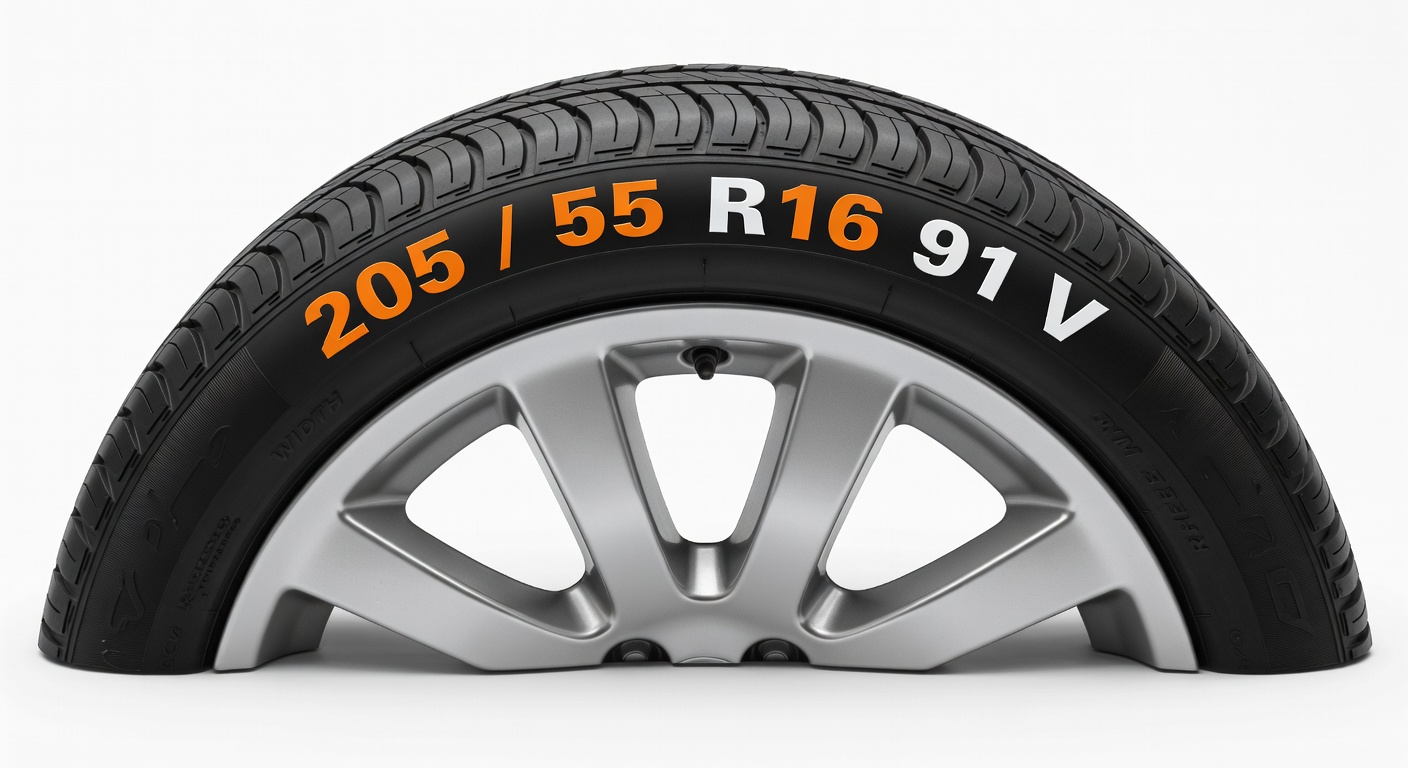
- 1Look at your sidewallFind the molded code on the side of your current tire. It reads like 245/45R17 95V. Yours will most likely be different from this example.
- 2Match each numberCompare width, profile, rim, load index and speed rating against the option that fits your car.
- 3Pick a like-for-likeUse the same size, or pick a higher rated one. Never a lower one.
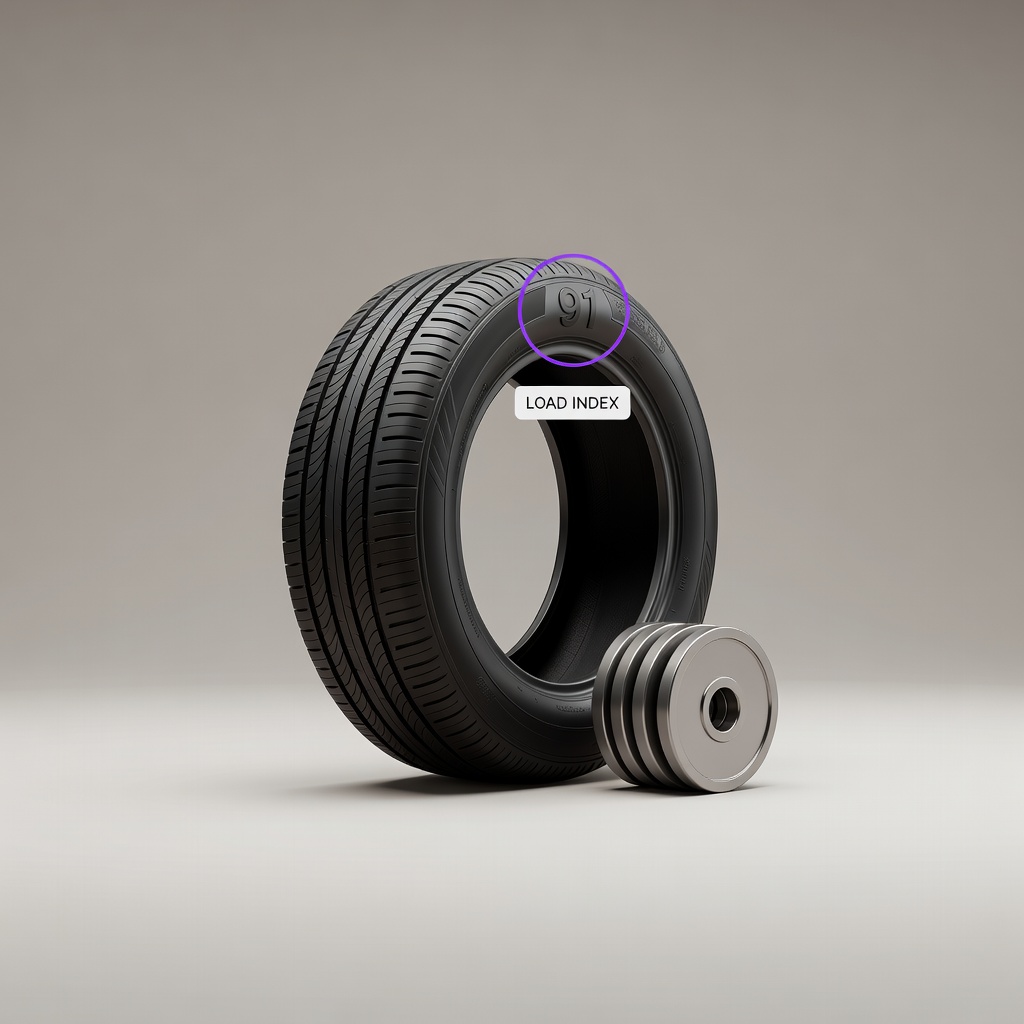

Reading the code, number by number
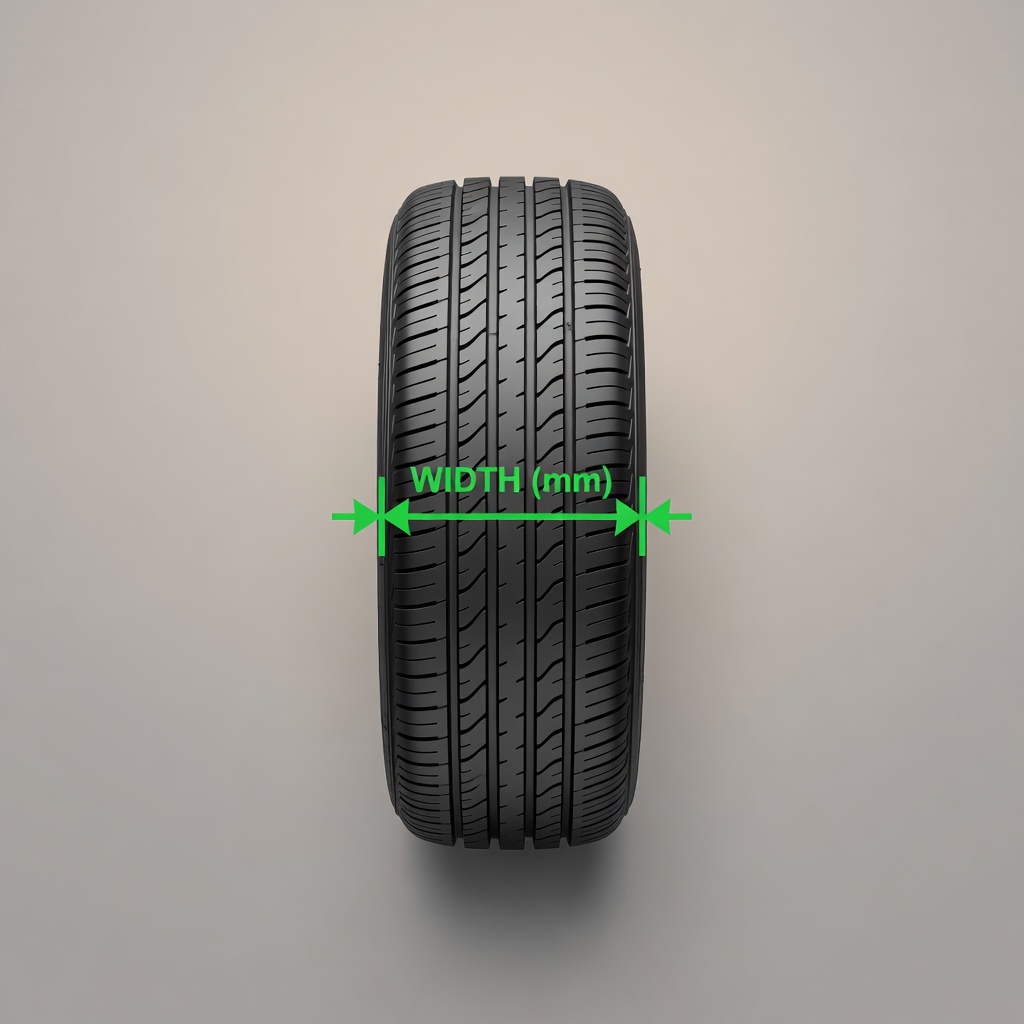
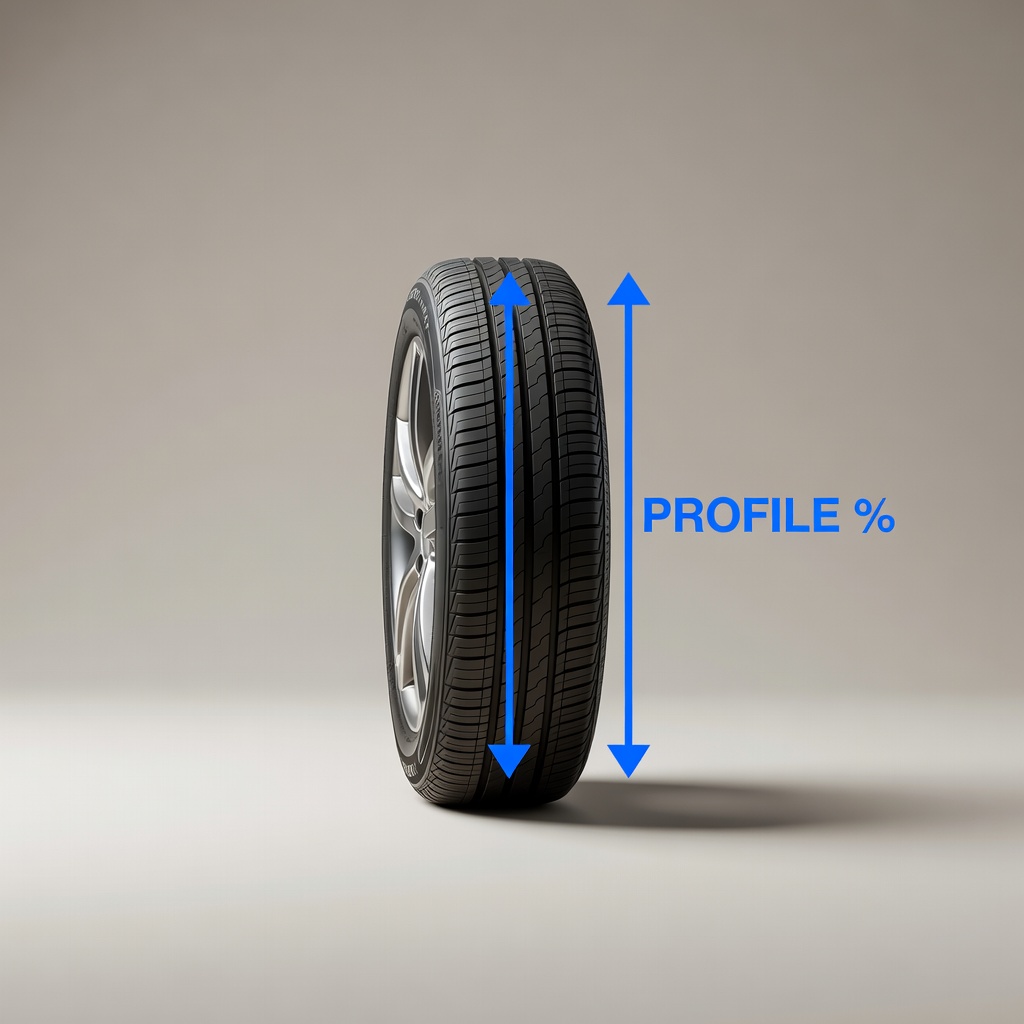
Take 205/55 R16 91V. The 205 is the width of the tread in millimetres, measured across the tire. The 55 is the profile, and it is a percentage rather than a measurement: the sidewall height is 55 per cent of the width. That is why two tires with the same profile number can have very different sidewall heights if their widths differ.
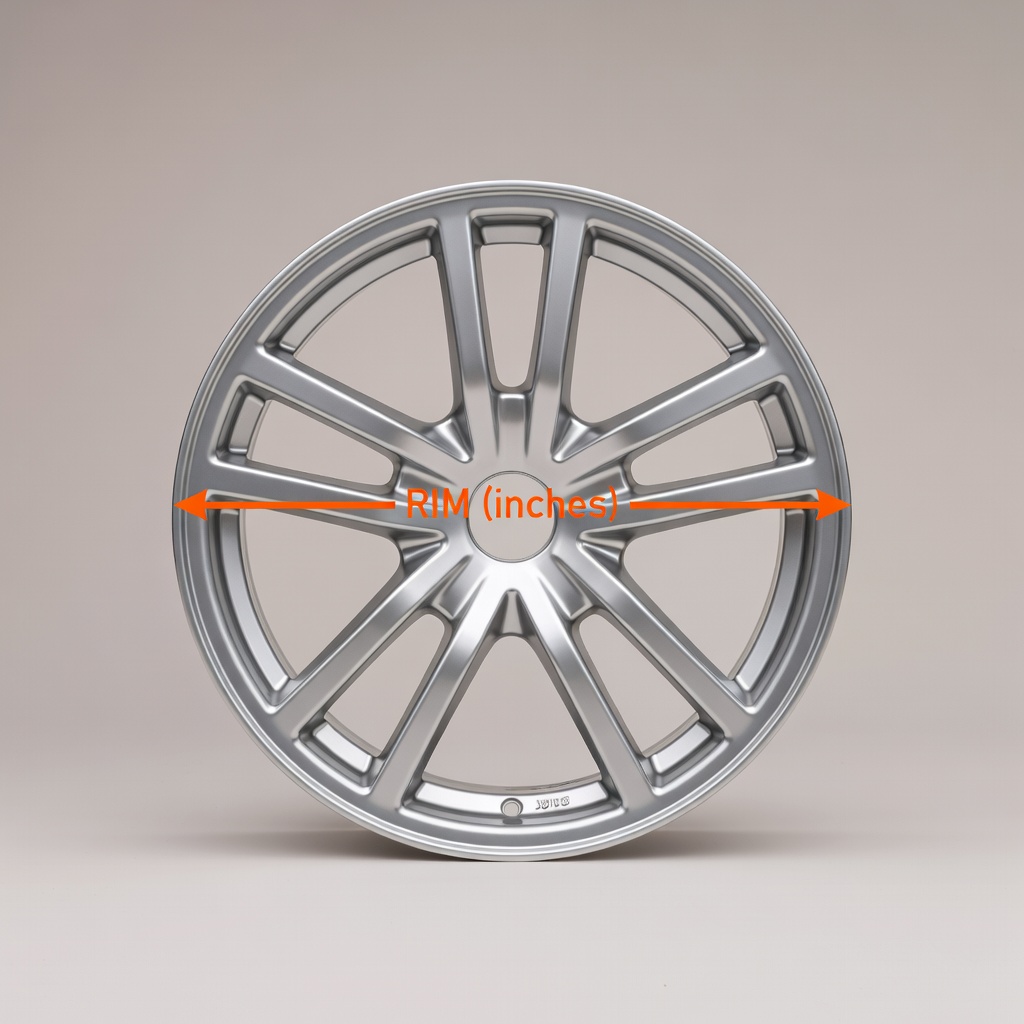
The R means radial construction, which is what almost every road car uses. The 16 is the rim diameter in inches, so it must match your wheel exactly. Mixing units in one code looks odd until you know the history, and then it simply is what it is.
The last two characters are the ones people skip, and they are the ones that matter most for safety. The 91 is the load index and the V is the speed rating.
Load index and speed rating: never step down
The load index is a code, not a weight. It maps to a maximum load each tire can carry, and your car maker chose it with the fully laden weight of the car in mind. The speed rating works the same way, mapping a letter to a maximum sustained speed.
Fitting a tire with a lower rating than the manufacturer specifies is the one substitution to avoid. In many markets it can affect your insurance, and on a heavy car or an electric one the load index is not a comfort figure but a structural one. Going higher is generally fine; going lower is not.
If a fitter offers you a tire with a different rating, it is fair to ask them to show you the placard figure and explain the difference before you agree.
Where to find your size, and what to do when sources disagree
There are three places to look. The placard, usually a sticker inside the driver door shut and sometimes in the fuel filler flap or the glovebox. The owner handbook, which lists the approved sizes including optional wheel packages. And the sidewall of the tire currently fitted.
When the sidewall disagrees with the placard, trust the placard. The tire on the car is only evidence of what somebody fitted last time, which is not the same as what the car was designed for. A previous owner may have changed wheel size, or a fitter may have substituted what was in stock.
Checking your tread, and knowing when a tire is finished
Every tire has wear indicators moulded into the bottom of the main grooves. When the tread wears down level with those small raised bars, the tire has reached the legal minimum. You can see them by looking along a groove: once the surface is flush with the bar, it is done.
Grip in the wet falls away well before the legal limit, because the grooves exist to move water out from under the tire and a shallow groove moves less of it. Many drivers replace earlier than the law requires for that reason.
Check across the width, not just in the middle. Wear that is heavier on one edge points at alignment, wear in the center usually means over-inflation, and wear on both edges means under-inflation. The pattern tells you something the depth alone does not.
The other markings on the sidewall
The size is not the only thing moulded into the rubber. XL or Reinforced means a stronger casing rated for a higher load. M+S means mud and snow, and the three-peak mountain snowflake symbol next to it means the tire has passed a snow traction test, which M+S alone does not.
A four-digit code in an oval is the manufacturing date: the first two digits are the week, the last two the year. Rubber hardens with age whether the tire is used or not, so the date is worth a glance on a tire that has been on the car a long time or on a spare that has never turned.
An arrow means the tire is directional and must turn one way. The words outside and inside mean it is asymmetric and has a correct face. Both are easy to fit the wrong way round, and both cost grip when they are.
Can you change to a different size?
Sometimes, if the car maker approves it. Many cars have more than one approved wheel and tire package, and the handbook lists them. Staying within an approved combination keeps the overall rolling diameter close to the original, which matters because the speedometer, the odometer and the stability systems all read from wheel speed.
Changing to a size the manufacturer never approved is a different matter, and it is worth talking to a fitter rather than working it out from a calculator. They can tell you what the car takes, what clearance it has, and what it does to the readings.