
Diagnose it
Clunking Noise Over Bumps? What the Suspension Is Telling You
A clunking noise over bumps is your suspension reporting play somewhere. Here is how to narrow it down by when and where you hear it, before you pay anyone.
8 min lezen
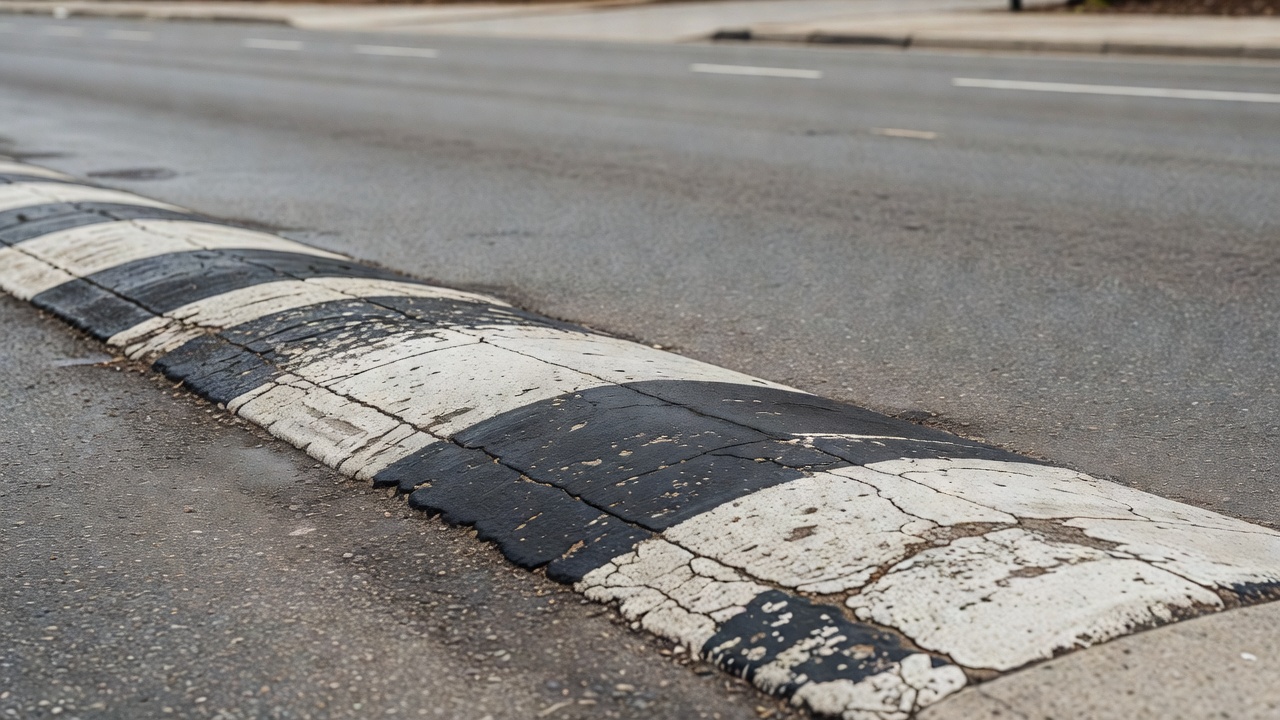
It started as an occasional knock over a speed bump. Now it is most bumps, and it sounds like something loose rattling under the front of the car.
A clunking noise over bumps is almost always play in a suspension or steering joint, and the good news is that the specific circumstances in which you hear it narrow the field considerably before anyone puts the car on a ramp.
When exactly do you hear it?
This is the question a good mechanic will ask first, so it is worth arriving with the answer.
- Only over bumps, both sides, a light metallic knock: very often anti-roll bar links. They are one of the most common causes and among the cheapest to replace.
- Over bumps and when turning at low speed, a heavier clunk: more likely a suspension arm bush or a ball joint.
- A knock when turning the steering while stationary or nearly so: often a steering component or a top mount.
- A single loud clunk when pulling away or when changing between forward and reverse: drivetrain rather than suspension.
- A rhythmic knock that speeds up with road speed: not suspension at all, that is rotational and needs checking differently.
Note whether it comes from one corner or both. One corner points at a worn part; both sides equally often points at something that wears symmetrically, such as anti-roll bar links or drop links.
The checks you can do on the driveway
None of these need tools and they will often confirm what you are dealing with.
- Bounce test: push down hard on one corner of the car and release. It should settle in about one bounce. Continuing to bounce points at a tired damper.
- Listen while a passenger bounces each corner. A knock during the bounce points at a joint rather than a damper.
- Look behind each front wheel for a torn rubber boot on a joint. A split boot lets grit in and the joint fails not long after.
- Look for oil or wetness running down a damper body, which means it has lost its fluid.
- Check the boot and the spare wheel. A loose jack is a remarkably common cause of a clunk that everyone assumes is suspension.
That last one is not a joke. Before booking anything, empty the boot and drive the same road. It costs five minutes and it settles the question.
What each of the usual suspects does
A short translation of the parts you will be quoted for.
Anti-roll bar links connect the anti-roll bar to the suspension and control body roll. They are small, they wear out routinely, and they are usually inexpensive. Suspension bushes are rubber mounts that let arms pivot while absorbing vibration; when they perish the arm moves further than it should and knocks. Ball joints allow the wheel to steer and move up and down at the same time, and a worn one has play in a joint that should have none.
Dampers control the springs. A failed damper does not usually knock so much as make the car float, bounce and feel unsettled, and it lengthens braking distances because the tyre is not held against the road as consistently.
How urgent is it?
Most suspension noises are wear rather than emergency, but they are not all equal.
- A light knock over bumps only, driving otherwise normally: get it looked at soon, not tonight.
- A knock accompanied by vague or wandering steering: sooner, because that suggests play affecting how the car is steered.
- A knock with a change in how the car sits, or an obvious lean: stop driving and have it inspected.
- A knock with uneven or scalloped tyre wear appearing: the fault is now costing you tyres as well.
- A sudden loud bang followed by strange handling: do not drive it.
The middle three are the ones people tend to under-rate, because the car still drives and the noise is intermittent.
Why it costs you more than the part
Suspension play has a knock-on effect that is easy to miss.
Worn joints and bushes let the wheel sit at angles it should not, which is alignment drifting without anything being knocked. That shows up as uneven tyre wear, which is why a suspension problem left alone often presents its bill as a set of tyres rather than as a repair.
It also means alignment cannot be set reliably until the worn part is replaced. Aligning a car with play in a joint gives numbers that look right in the bay and drift again within weeks, so the correct order is always repair first, align second.
What to tell the workshop
Being specific saves diagnostic time, which is usually what you are paying for.
Say when it happens: over bumps, when turning, when pulling away, at what speed, and whether it is one corner or both. Say whether anything has changed in how the car steers or sits. Mention any recent pothole or kerb strike, including one you thought was unremarkable at the time.
One more thing worth ruling out before you spend anything: a clunking noise over bumps that only appeared after recent work is worth mentioning to whoever did the work. A fastener that has not been fully torqued, or a component refitted slightly out of position, produces exactly this symptom and is corrected quickly by the people who know what they touched.
And ask them to show you. Play in a joint is visible and demonstrable with the car in the air, and a workshop that is confident in the diagnosis will happily point at the part that moves when it should not.
Veelgestelde vragen
What causes a clunking noise over bumps?
Almost always play in a suspension or steering joint. Anti-roll bar links are among the most common causes and the cheapest to fix, while a heavier clunk that also appears when turning at low speed points more at a bush or ball joint.
Is it safe to drive with a clunking suspension?
A light knock over bumps with the car otherwise driving normally usually means soon rather than tonight. A knock alongside vague steering, a change in how the car sits, or a sudden bang followed by odd handling all mean stop and have it inspected.
How can I check the suspension myself?
Push down hard on one corner and release: it should settle in about one bounce, and continuing to bounce points at a tired damper. Look for torn rubber boots on the joints and for oil running down a damper body. Also empty the boot, because a loose jack causes a surprising number of these.
Why does a suspension fault wear my tyres?
Worn joints and bushes let the wheel sit at angles it should not, which is alignment drifting without anything being knocked. That produces uneven wear, which is why a suspension problem often presents its bill as a set of tyres.
Should I get the alignment done at the same time?
After the repair, not before. Aligning a car that still has play in a joint gives numbers that look correct in the bay and drift again within weeks, so the order is always repair first and align second.
Lees meer zoals dit
Diagnose it
Odeur de brûlé : ce que chaque odeur désigne
Une odeur de brûlé n'est pas un symptôme unique. Ce qui brûle a une odeur reconnaissable, et l'une d'elles impose de couper le moteur.
Diagnose it
Fumée à l'échappement : ce que la couleur dit
Bleue, blanche ou noire : chaque couleur désigne un liquide différent qui brûle là où il ne devrait pas être.
Diagnose it
Surconsommation : par où commencer à chercher
Une surconsommation vient plus souvent de quelque chose de gratuit à corriger que d'une panne. Encore faut-il la mesurer correctement.
Heeft u banden of een service nodig?
Zoek op nummerplaat of maat, vergelijk de prijzen van lokale specialisten, en boek met de prijs vastgelegd.
Vind banden