
electric
Pneus et voiture électrique : ce qui change
Une voiture électrique use ses pneus plus vite, pour des raisons de physique plutôt que de qualité. Ce qu'il faut en tirer au moment d'acheter.
9 min lezen
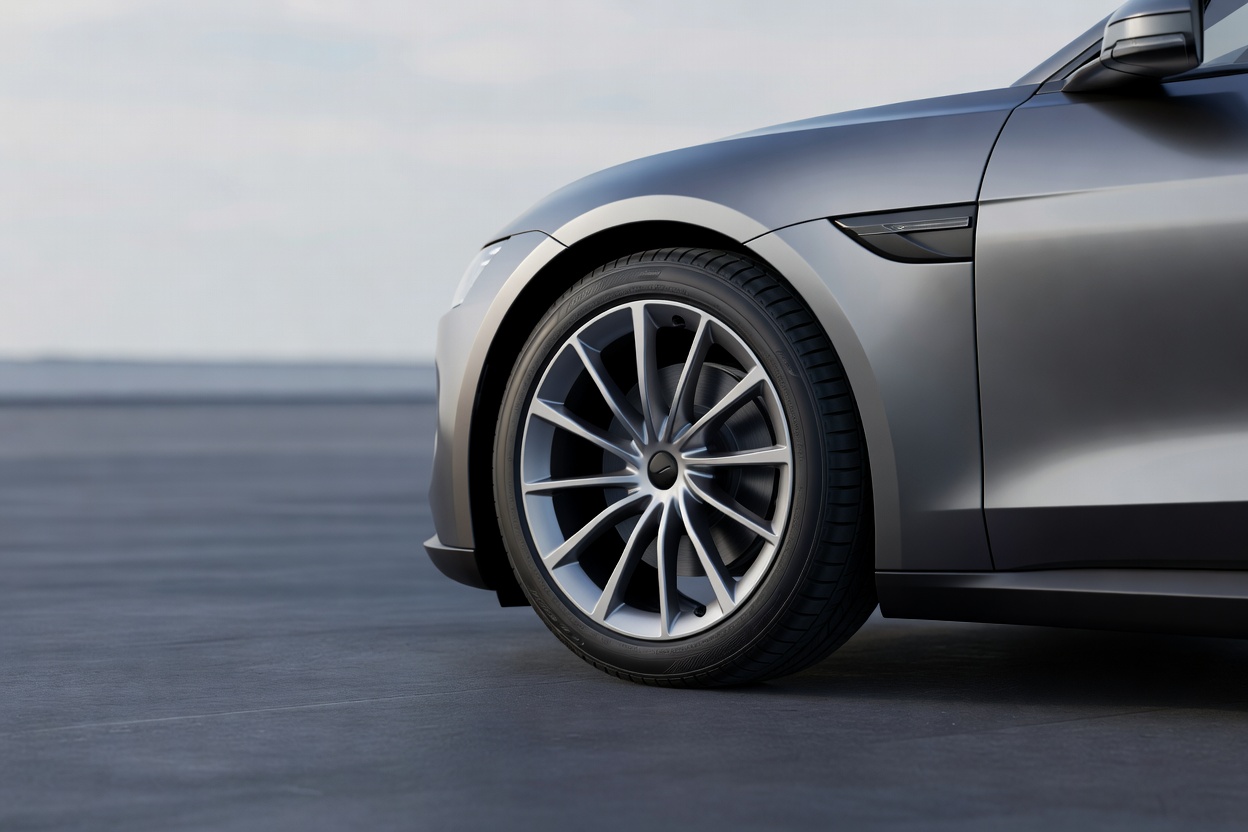
C'est l'une des rares mauvaises surprises de l'électrique, et elle arrive tôt : le premier train de pneus part plus vite que sur la voiture d'avant. Ce n'est ni un défaut de fabrication ni un mauvais choix du constructeur.
Les pneus d'une voiture électrique travaillent davantage, pour trois raisons qui s'additionnent et qui tiennent à la physique du véhicule plutôt qu'à sa qualité.
Trois raisons qui s'additionnent
- La masse. Une batterie pèse plusieurs centaines de kilos, et un véhicule électrique dépasse couramment de vingt à trente pour cent le poids d'un équivalent thermique. Tout ce poids passe par quatre empreintes de la taille d'une main.
- Le couple. Un moteur électrique délivre son couple maximal immédiatement, sans montée en régime, ce qui sollicite la gomme dès le premier tour de roue.
- La récupération d'énergie. Le ralentissement passe en grande partie par les roues motrices au lieu d'être réparti sur les quatre freins, ce qui concentre le travail.
- S'y ajoute un facteur humain : les reprises sont si faciles qu'on les utilise plus souvent, et cela se lit sur les pneus.
- Enfin, le silence du véhicule fait remarquer un bruit de roulement qui passait inaperçu, ce qui pousse à changer plus tôt pour le confort.
L'ordre de grandeur souvent cité est une usure supérieure d'environ vingt pour cent, avec une dispersion importante selon la conduite. Le troisième point explique aussi une observation fréquente : sur beaucoup d'électriques, l'usure est plus concentrée sur l'essieu moteur que sur un thermique équivalent.
Les pneus conçus pour l'électrique
Ce n'est pas un argument marketing, et les différences sont mesurables.
La structure et les flancs sont renforcés pour supporter la charge supplémentaire sans se déformer davantage. La gomme et le dessin visent une résistance au roulement basse, parce que sur un véhicule électrique cela se traduit directement en autonomie. Et beaucoup de ces pneus intègrent une mousse absorbante à l'intérieur, destinée à casser la résonance de la cavité d'air, qui est la principale source du bruit de roulement perçu dans un habitacle silencieux.
On les reconnaît à un marquage du fabricant, variable selon les marques, et le vendeur les identifie à partir du véhicule.
L'indice de charge, le point à ne pas rater
C'est l'erreur la plus fréquente au moment de remplacer, et la plus facile à éviter. À côté de la dimension, le flanc porte un indice de charge et un indice de vitesse.
Le poids supplémentaire d'un véhicule électrique impose souvent un indice de charge plus élevé que la même dimension sur un thermique. Monter la bonne dimension avec un indice inférieur est une non-conformité, cela se voit au contrôle technique, et surtout le pneu travaille au-delà de ce pour quoi il est prévu.
La règle est simple : la dimension seule ne suffit pas, il faut la dimension ET les indices figurant sur la plaque du constructeur ou dans les papiers du véhicule. Un vendeur sérieux le vérifie sans qu'on le lui demande.
Faut-il forcément des pneus spécifiques ?
Pas obligatoirement, à condition de respecter dimension et indices. Un bon pneu de tourisme conforme fonctionnera correctement sur un véhicule électrique.
Ce que vous perdrez est mesurable plutôt que dramatique : un peu d'autonomie, en raison d'une résistance au roulement plus élevée, davantage de bruit de roulement dans un habitacle qui n'a rien d'autre à faire entendre, et probablement une usure un peu plus rapide.
C'est un arbitrage légitime, surtout si l'écart de prix est important. Il mérite simplement d'être fait en connaissance de cause plutôt que par défaut, et il se juge au coût par mille kilomètres et non au prix affiché.
Ce que cela change au budget, et à l'achat d'occasion
Deux conséquences pratiques découlent de tout ce qui précède, et aucune n'est évidente au moment de signer.
La première est budgétaire. Si vous comparez le coût d'usage d'un électrique et d'un thermique, comptez les pneus séparément plutôt que de les traiter comme équivalents : une usure supérieure d'environ vingt pour cent, sur des dimensions souvent plus grandes et avec un indice de charge plus élevé, représente une ligne réelle. Elle ne renverse pas l'avantage à l'usage, elle le réduit, et une comparaison honnête la contient.
La seconde concerne l'occasion. Sur un électrique d'occasion, l'état des pneus est un poste à chiffrer au même titre que l'état de la batterie, et il se néglige d'autant plus facilement que l'attention se porte entièrement sur la batterie. Quatre pneus à trois millimètres, en grande dimension avec indice renforcé, sont une dépense à quatre chiffres qui n'apparaît nulle part dans l'annonce.
Regardez donc les quatre flancs et les quatre profondeurs avant de parler du prix, exactement comme vous demanderiez un certificat de santé de la batterie. Les deux se lisent en cinq minutes et se déduisent l'un comme l'autre.
Les faire durer
- La pression, contrôlée mensuellement à froid, et à la valeur du constructeur, souvent plus élevée que sur un thermique comparable.
- La conduite : la récupération d'énergie bien anticipée use moins que des accélérations franches suivies de ralentissements tardifs.
- La géométrie, à faire contrôler plus souvent que sur un thermique, parce que la masse amplifie les conséquences d'un défaut de réglage.
- La permutation avant-arrière selon le schéma constructeur, quand la monte le permet, particulièrement utile ici puisque l'usure est déséquilibrée.
- Et l'évidence : les reprises spectaculaires sont gratuites en carburant, pas en gomme.
Le dernier point est celui que les propriétaires reconnaissent en souriant. Le coût au kilomètre d'une voiture électrique se déplace simplement d'un poste à l'autre : ce que vous ne dépensez plus à la pompe, vous en dépensez une partie chez le monteur.
Veelgestelde vragen
Une voiture électrique use-t-elle vraiment plus ses pneus ?
Oui, d'environ vingt pour cent selon les estimations courantes, avec une forte dispersion selon la conduite. Trois causes s'additionnent : la masse de la batterie, le couple disponible immédiatement, et la récupération d'énergie qui concentre le ralentissement sur les roues motrices.
Faut-il des pneus spécifiques ?
Pas obligatoirement, tant que la dimension et les indices sont respectés. Les pneus conçus pour l'électrique apportent une structure renforcée, une résistance au roulement plus basse donc de l'autonomie, et souvent une mousse absorbante contre le bruit de roulement.
Qu'est-ce que l'indice de charge et pourquoi est-il critique ?
C'est le chiffre à côté de la dimension sur le flanc. Le poids d'un véhicule électrique impose souvent un indice plus élevé que la même dimension sur un thermique. Un indice inférieur est une non-conformité, visible au contrôle technique, et le pneu travaille au-delà de sa conception.
Pourquoi entend-on davantage les pneus ?
Parce qu'il n'y a plus de moteur thermique pour les couvrir. Le bruit de roulement n'a pas augmenté, il est devenu audible. C'est la raison de la mousse absorbante intégrée dans beaucoup de pneus destinés à l'électrique, qui casse la résonance de la cavité d'air.
Comment les faire durer ?
Pression mensuelle à froid à la valeur constructeur, souvent plus élevée que sur un thermique ; anticipation de la récupération plutôt qu'accélérations franches et ralentissements tardifs ; géométrie contrôlée plus souvent, la masse amplifiant tout défaut de réglage.
Lees meer zoals dit
electric
Borne de recharge à domicile : ce qu'il faut savoir
Recharger chez soi transforme le coût d'un véhicule électrique. Ce qui coûte cher n'est pas la borne de recharge, c'est l'installation.
electric
How Long Do Electric Car Batteries Last? What the Evidence Shows
How long do electric car batteries last? They degrade gradually rather than failing, most of it happens early, and how you charge matters more than mileage.
Diagnose it
Odeur de brûlé : ce que chaque odeur désigne
Une odeur de brûlé n'est pas un symptôme unique. Ce qui brûle a une odeur reconnaissable, et l'une d'elles impose de couper le moteur.
Heeft u banden of een service nodig?
Zoek op nummerplaat of maat, vergelijk de prijzen van lokale specialisten, en boek met de prijs vastgelegd.
Vind banden