
Tyres
Run Flat Tyres Explained: How They Work and What They Cost You
Run flat tyres let you keep driving after a puncture. Here is how they do it, what you give up in exchange, and whether to keep them when they wear out.
9 min lezen
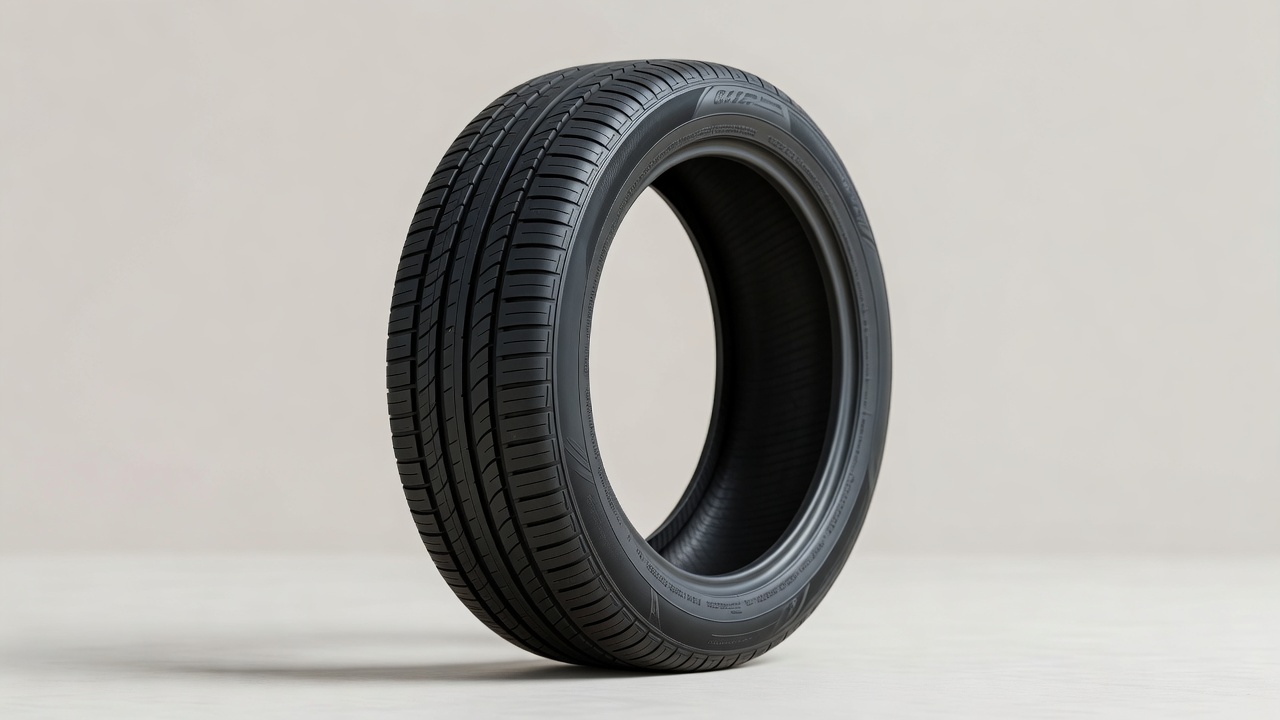
Most drivers meet run flat tyres by accident. The car came with them, something went through the tread, and the first anyone mentions it is when the replacement quote arrives and it is noticeably higher than expected.
Run flat tyres are a genuinely clever piece of engineering with a real trade attached. Here is how they work, what you give up for the convenience, and how to decide what to fit when the originals wear out.
How a run flat actually works
An ordinary tyre holds up the car with air. Take the air away and the sidewall folds, the wheel drops onto the rim, and you stop.
A run flat holds up the car with its own structure. The sidewall is heavily reinforced, thick enough to carry the weight of the car on its own for a limited distance with no air in it at all. The engineering problem is that a sidewall stiff enough to do that is also stiff enough to change how the car rides.
A second design exists where a hard ring sits on the wheel itself and the deflated tyre rests on that instead. It is less common on ordinary cars, and it needs specialist equipment to fit, but the principle is the same: something solid takes over when the air goes.
The fifty at fifty rule
The usual specification is around fifty miles at up to fifty miles per hour after a total loss of pressure. Treat both numbers as a ceiling rather than a target.
That distance is designed to get you off the motorway and somewhere safe, not to let you finish a long journey. The reinforced sidewall is carrying a load it was never meant to carry continuously, and it is quietly destroying itself the whole time. The further you drive, the more certain it becomes that the tyre is scrap rather than repairable.
Drive to the nearest place that can help you, gently, and stop there. Do not treat it as a spare wheel.
Why you probably cannot have it repaired
This is where run flats surprise people, and it is the single most expensive consequence of running them.
After a run flat has been driven on while deflated, the internal damage is invisible from outside. The sidewall has been flexing and heating in a way it was not designed for and the structure may be compromised even though the tyre looks perfectly normal. Most manufacturers therefore say a run flat that has been driven on flat must be replaced rather than repaired, and most fitters follow that guidance.
The practical result is that a nail in the tread, which on an ordinary tyre is a cheap plug repair, is often a new tyre on a run flat. That is the real cost, and it arrives at the worst moment.
The pressure monitoring system is not optional
A run flat drives so normally with no air in it that you genuinely may not notice. That is the whole point, and it is also the danger.
This is why cars fitted with run flats have a tyre pressure monitoring system, and why an ignored warning light on such a car is a more serious matter than on an ordinary one. Without it you can drive a deflated run flat well past its safe distance without ever suspecting anything is wrong.
If the warning light on your car is on and you have run flats, treat it as information rather than an annoyance. It is doing the job your ears and the steering would otherwise do.
What you give up
The stiff sidewall that makes the whole thing work has consequences you feel every day, not just on the day you get a puncture.
- A firmer ride. Sharp bumps and expansion joints come through more distinctly, because the sidewall flexes less.
- More road noise, for the same reason.
- More weight, which costs a little fuel or range.
- A higher purchase price, typically a meaningful premium over the equivalent ordinary tyre.
- Fewer choices. Not every model is made in a run flat version in every size.
- A puncture that is usually a replacement rather than a repair.
Against that, one benefit that is worth taking seriously: you never change a wheel at the roadside in the dark, and you are not stranded when a car has no spare, which most modern cars do not.
Can you switch to ordinary tyres?
Usually yes, and plenty of owners do when the first set wears out. There are conditions worth understanding before you decide.
Fit them in complete sets. Mixing run flats and ordinary tyres on the same car gives you two different sidewall stiffnesses working against each other, which changes handling and is generally advised against. If you are switching, switch all four.
Then accept what you have changed. Without run flats a puncture means you need something to get you home, and many cars with run flats have no spare wheel and no space for one. A sealant kit and a compressor covers most tread punctures, but it will not help with a sidewall tear.
Check your car's handbook too. Some manufacturers specify run flats as a requirement rather than a fitment choice, and on those cars the sensible answer is to stay with what the car was designed around.
So should you keep them?
There is no universal answer, but the decision usually comes down to two honest questions.
First, how much do you value never being stranded? If you drive alone at night, cover long distances, or would struggle to change a wheel, the convenience is worth real money and the ride penalty is a fair price.
Second, how much does the ride bother you? If the car crashes over every pothole and you have always wondered why, the sidewall is a large part of the answer, and switching to ordinary tyres with a decent sealant kit transforms it.
Whatever you decide, decide it deliberately at replacement time rather than defaulting. The choice is easiest to make when you are comparing prices in advance, not when a tyre has already failed.
Veelgestelde vragen
How far can you drive on a run flat tyre?
Typically around fifty miles at up to fifty miles per hour after losing all pressure, though you should check your own car's figure. Treat it as a ceiling to reach safety, not a distance to plan around, because the tyre is degrading the whole time.
Can a run flat tyre be repaired?
Usually not, once it has been driven on while deflated. The internal damage is invisible from outside, so most manufacturers require replacement rather than repair. That turns a cheap tread puncture into a new tyre, which is the real cost of running them.
Are run flat tyres more expensive?
Yes, on both counts. They cost more to buy than the equivalent ordinary tyre, and a puncture that would be a cheap repair on a normal tyre usually means replacement. Set against that, you are not buying a spare wheel or a roadside wheel change.
Can I fit normal tyres instead of run flats?
On most cars yes, provided you change all four rather than mixing types, and provided your handbook does not specify run flats as a requirement. You will want a sealant kit and compressor afterwards, since cars built around run flats rarely carry a spare.
Why do run flat tyres ride so firmly?
The reinforced sidewall that holds the car up without air is much stiffer than a normal one, so it absorbs less of each bump. The firmness and the extra road noise are the direct price of the feature working at all.
Lees meer zoals dit
Tyres
Réparer un pneu crevé : quand c'est possible
Réparer un pneu coûte une fraction du prix d'un neuf, mais tout ne se répare pas. La zone compte plus que la taille du trou.
Tyres
Étiquette européenne : lire les trois notes
Chaque pneu vendu en Europe porte la même étiquette. Trois notes, et une seule sur laquelle il ne faut jamais transiger.
Tyres
Durée de vie des pneus : kilomètres ou années
Un pneu a deux limites et la plupart des conducteurs n'en surveillent qu'une. Celle qui arrive en premier dépend de votre usage.
Heeft u banden of een service nodig?
Zoek op nummerplaat of maat, vergelijk de prijzen van lokale specialisten, en boek met de prijs vastgelegd.
Vind banden