
Diagnose it
Clutch Slipping? The Test That Confirms It in Thirty Seconds
A slipping clutch shows as revs rising without speed following. Here is the test that confirms it, what wears one out early, and what to expect on cost.
8 leitura mínima
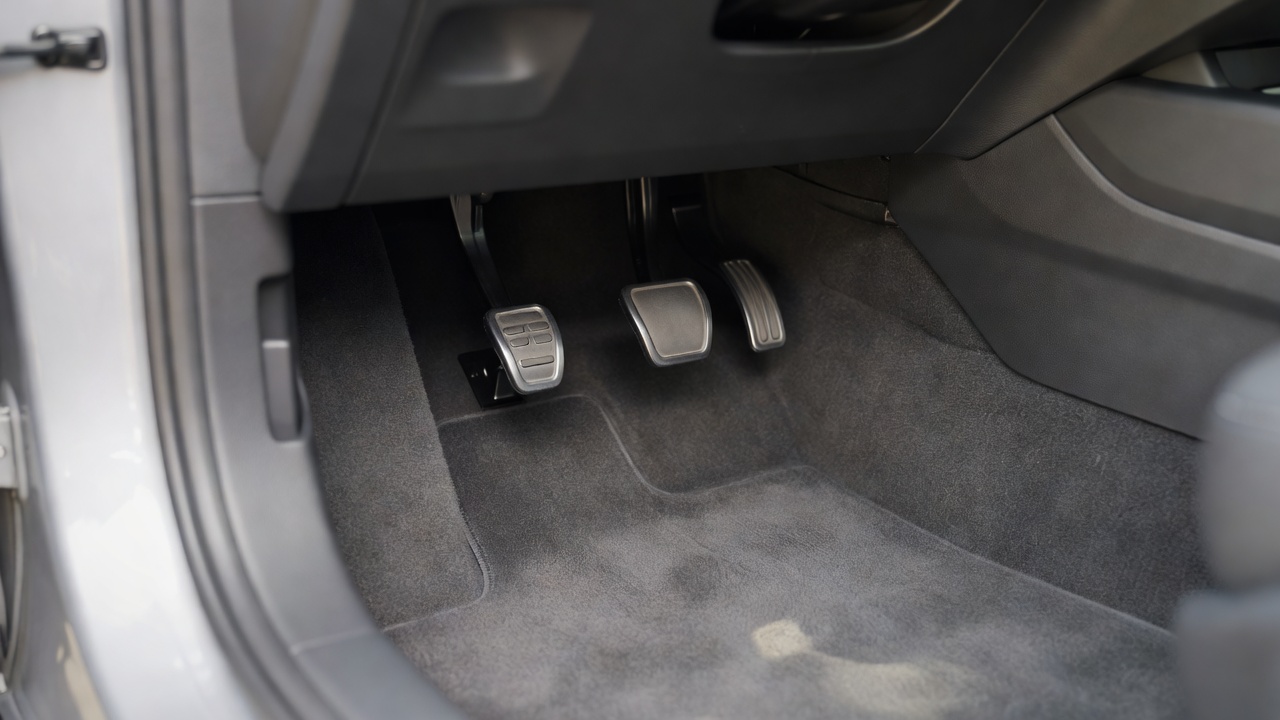
Something has changed about how the car pulls away, or the engine seems to rev more than it used to for the same amount of progress, and someone has said the word clutch.
Clutch slipping is one of the easier faults to confirm yourself, and there is a test that takes about thirty seconds and gives a clear answer. Worth doing before you accept a quote for anything.
What slipping actually is
A clutch works by friction. Two surfaces are pressed together hard enough that they turn as one, connecting the engine to the gearbox.
As the friction material wears, the grip weakens. Eventually there are moments when the engine turns faster than the gearbox because the surfaces are sliding against each other rather than locking. That is slipping, and it converts your fuel into heat instead of movement.
Clutch slipping gets worse with use, and it accelerates: a slipping clutch generates heat, and heat degrades the friction material faster.
The thirty-second test
Do this somewhere safe, flat and private, such as an empty car park, with the handbrake fully on.
- Start the engine and let it idle.
- Apply the handbrake firmly, then hold the footbrake as well.
- Select third or fourth gear, not first.
- Bring the clutch up slowly while applying a little throttle.
- The engine should struggle and stall. If it does not, and instead revs while the car sits still, the clutch is slipping.
A healthy clutch in a high gear against a held car will stall the engine, because the clutch grips harder than the engine can overcome. One that lets the engine keep spinning has lost that grip. Do this once, briefly, rather than repeatedly, because the test itself is hard on the clutch.
The everyday symptoms
- Revs rise faster than speed, most obvious accelerating uphill or in a high gear at low speed.
- The biting point has moved noticeably higher up the pedal travel than it used to be.
- A burning smell after a hill or heavy traffic, similar to hot brakes but sharper.
- The car feels less willing to pull in higher gears while sounding perfectly healthy.
- Occasional judder when pulling away, though this can also be other things.
The biting point moving is often the earliest sign and the easiest to miss, because it moves gradually and you adapt without noticing. A useful check is whether anyone else who drives the car has commented.
What is not a slipping clutch
Several other faults get blamed on clutch slipping and are worth separating out.
A pedal that has gone soft or dropped to the floor is a hydraulic problem, a master or slave cylinder, not the friction material. A rumbling that changes when you press the pedal points at the release bearing. A judder only on pulling away, with no slipping in higher gears, can be engine or gearbox mounts rather than the clutch itself. And difficulty selecting gears with no slipping is usually the clutch not fully disengaging, which is again hydraulic or cable rather than wear.
Those distinctions matter because some are considerably cheaper than a clutch replacement, and a slipping test that comes back clean points you towards them.
What wears a clutch out early
Clutches are a wear item and how long one lasts depends almost entirely on how it is used.
- Riding the pedal, resting a foot on it while driving, which keeps light pressure on the release mechanism.
- Holding the car on a hill with the clutch instead of the brake. This is the single most damaging habit.
- Slipping the clutch excessively when manoeuvring, particularly on inclines.
- Sitting in traffic with the clutch down in gear rather than in neutral.
- Towing or carrying heavy loads regularly, which is unavoidable duty rather than misuse.
The hill-holding one is worth singling out. It burns the friction material rapidly, it is common on a hill start, and the handbrake does the same job for free.
How long can you carry on?
A clutch that has just started slipping under load will usually still get you around for a while, and the honest answer is that nobody can tell you exactly how long.
What is predictable is the direction. It gets worse rather than better, the rate accelerates, and the failure mode is that it stops transmitting drive at all, which strands you rather than degrading gracefully. Planning the repair is much cheaper than being surprised by it.
Worth knowing on cost: most of the bill is labour, because reaching the clutch means separating the gearbox from the engine. That is why the release bearing and often the flywheel are done at the same time, and why declining those to save a little now risks paying the whole labour cost again.
Before you commit to a quote
Automatics and dual-clutch gearboxes
Clutch slipping is usually discussed as a manual problem, and the equivalent on an automatic behaves differently enough to be worth separating.
A traditional torque converter automatic has no friction clutch to wear in the same way, but it does have a lock-up clutch inside the converter, and when that starts slipping you get a similar symptom: revs rising slightly out of step with speed, most often at a steady cruise. It tends to arrive alongside other gearbox symptoms rather than alone.
A dual-clutch gearbox does have real clutches and they do wear, particularly on cars used mostly in heavy traffic where the clutches spend a lot of time partly engaged. The symptoms are judder pulling away and hesitation between gears more than the classic revs-without-speed slip. Either way, the diagnosis is not a driveway test and the gearbox fluid service history matters more than it does on a manual.
Do the stall test yourself so you know what you are buying. If the engine stalls cleanly in third or fourth against the brakes, the clutch is gripping and the symptom is something else.
And ask what the quote includes. A clutch kit is a plate, a cover and a release bearing; whether the flywheel is replaced or resurfaced is the variable that moves the price most, and it is a reasonable thing to have explained rather than discovered.
Perguntas comuns
How do I know if my clutch is slipping?
On a flat private area, apply the handbrake firmly, select third or fourth gear and bring the clutch up with a little throttle. A healthy clutch stalls the engine. If the engine revs while the car sits still, the clutch is slipping. Do it once, briefly, as the test is hard on the clutch.
What are the symptoms of a worn clutch?
Revs rising faster than speed, especially uphill or in a high gear, a biting point that has moved higher up the pedal, a sharp burning smell after a hill, and the car feeling less willing to pull while sounding healthy.
Does a high biting point mean the clutch is worn?
It is often the earliest sign and the easiest to miss, because it moves gradually and you adapt. On its own it is suggestive rather than conclusive, so confirm with the stall test before assuming.
What wears a clutch out fastest?
Holding the car on a hill with the clutch instead of the handbrake is the most damaging common habit. Riding the pedal, slipping it excessively when manoeuvring and sitting in traffic in gear rather than neutral all contribute.
Can I keep driving with a slipping clutch?
Usually for a while, though nobody can say how long. What is predictable is that it worsens at an accelerating rate and eventually stops transmitting drive entirely, which strands you. Planning the repair costs less than being surprised by it.
Leia mais como este
Diagnose it
Burning Smell From Car? What Each One Usually Means
A burning smell from car vents or under the bonnet has a handful of likely causes, and they are not equally urgent. Here is how to tell which one you probably have.
Diagnose it
Car Air Conditioning Not Cold? What That Usually Means
Car air conditioning not cold any more? It rarely breaks suddenly. It fades, and the way it fades tells you whether this is a refrigerant job or something else.
Diagnose it
Car Pulls to One Side? Work Through It in This Order
When a car pulls to one side the causes run cheap to expensive in a predictable order. Here is how to work through them without paying for the wrong one.
Precisa de pneus ou de um serviço?
Pesquise pela placa ou pela medida dos pneus, compare preços com montagem de especialistas locais e agende com o preço garantido.
Encontre pneus