
Buying and selling
Car Depreciation Explained: The Cost Nobody Sends You a Bill For
Car depreciation is usually the largest cost of ownership and the least visible. Here is how it behaves, what accelerates it, and how to lose less to it.
8 lectura mínima
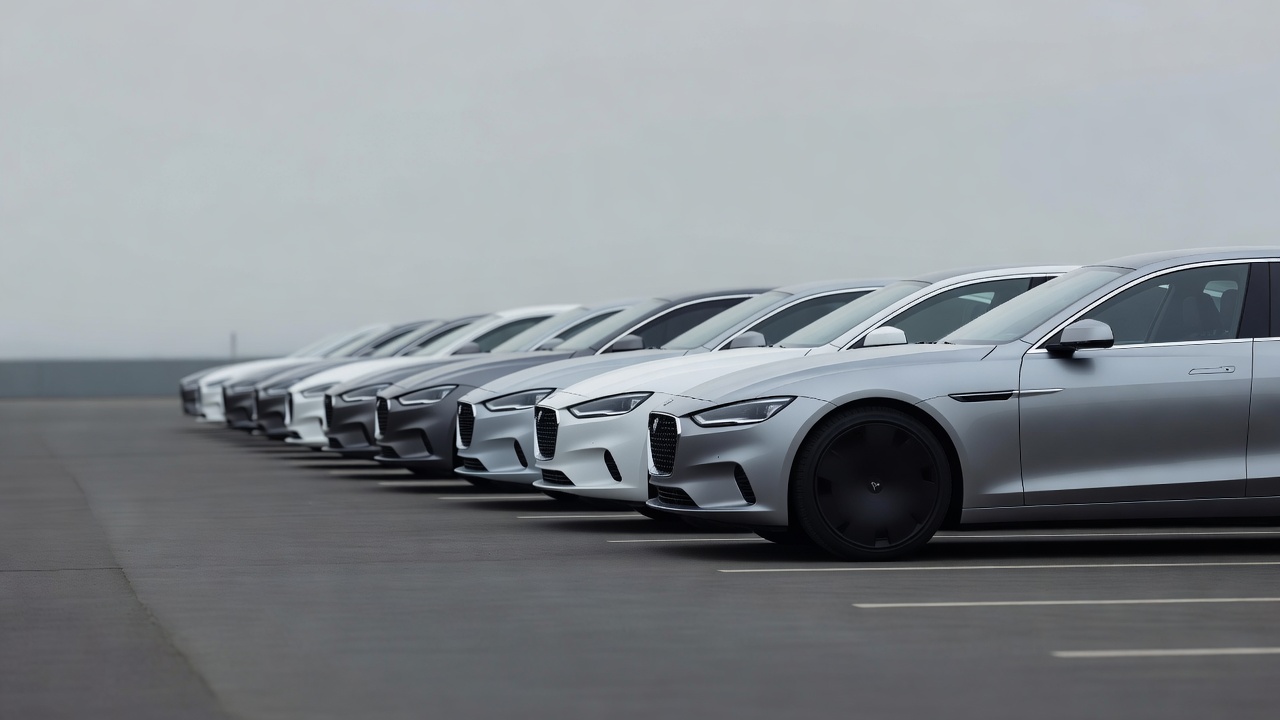
You can track every litre of fuel and every service invoice and still be wrong about what your car costs, because the largest number is usually the one nobody invoices.
Car depreciation is the difference between what you paid and what you get back, and for most owners it dwarfs fuel and servicing combined. It is worth understanding not to be depressed by it but because it is the one cost where a single decision moves it enormously.
The shape of the curve
Car depreciation is not a straight line. It is steepest at the beginning and flattens considerably as a car ages.
A new car takes a substantial hit the moment it is registered and continues to fall quickly through its first few years. By the time it is several years old the annual loss in money terms is far smaller, and by the time it is old enough to be worth relatively little, it can barely fall at all.
That shape is the whole strategy. Whoever owns the car during the steep part pays for it, and whoever owns it during the flat part pays very little. Everything else in this article is a detail by comparison.
What makes one car hold value better
- Demand for that model and specification, which is mostly outside your control and worth researching before buying.
- Fuel type and running costs, which shift with policy and fuel prices and can move faster than expected.
- Specification. Options that everybody wants hold value; unusual personal choices generally do not.
- Colour. Conventional colours sell more easily than bold ones, fairly or not.
- Condition and history, which is the part you actually control.
- Mileage relative to age, though how the miles were done matters to a buyer who asks.
The first four are decisions made at purchase. The last two are made over years of ownership, and they are where a careful owner recovers real money.
The part you control
Two cars of the same age and mileage can be worth noticeably different amounts, and the gap is almost entirely evidence.
A complete folder of invoices, a documented timing belt change, tyres that are not nearly finished, a clean interior and no warning lights: none of those are expensive individually, and together they move a car from the pile of similar adverts into the one that sells at the price asked.
The reverse is also true and more expensive than it looks. A missing service record, four worn tyres and a warning light do not reduce the price by what they cost to fix. They reduce it by more, because a buyer prices in uncertainty as well as parts.
How to lose less of it
- Buy a car that has already taken its steepest depreciation, rather than a new one.
- Keep it longer. Changing cars frequently is the most expensive ordinary habit in motoring.
- Buy a specification people want, in a conventional colour, rather than one tailored precisely to you.
- Keep every invoice, including for the small jobs, in one place.
- Sort the obvious things before selling: tyres near the limit, a due service, a blown bulb, a warning light.
The second point does most of the work. A car kept for eight years spreads the steep part of the curve across a long ownership; the same car changed every three keeps you permanently in the expensive section.
Where new still makes sense
None of this is an argument that buying new is irrational. It is an argument for knowing what you are buying.
A new car buys warranty, a known history, exactly the specification you want, and the absence of somebody else's neglect. Those have genuine value, and for some people the peace of mind is worth precisely what it costs. Certain models also depreciate slowly enough that the gap narrows considerably.
What is worth avoiding is buying new while believing it is the economical choice. It generally is not, and the difference is large enough to be worth facing honestly rather than discovering at part-exchange time.
Electric cars and a moving target
Worth a specific note because the picture has been unusually volatile.
Electric car values have moved more than the market generally in both directions, driven by battery cost, model availability, incentives and buyer confidence in used battery health. That makes historical depreciation figures a weaker guide than usual for them.
The practical consequence is that a documented battery state of health matters to resale in a way no equivalent exists for a petrol car. It is the single most useful thing an electric car owner can obtain before selling, and it protects against a buyer assuming the worst.
The one-line version
How to research it before you buy
Car depreciation is one of the few costs you can estimate before committing, and it takes about twenty minutes.
Look up the model you are considering at three ages: roughly current, three years older, and six years older, matched on similar mileage and specification. The gaps between those prices are the depreciation you would be signing up for over each period. Do the same for one or two alternatives and the differences are usually stark enough to influence the decision.
Two things to watch while doing it. Compare advertised prices consistently, since private and dealer listings are not the same number. And look at how many are for sale: a model with hundreds of near-identical listings will be harder to sell at your price than one with a handful, whatever the guides say it is worth.
Car depreciation is the biggest cost, it is steepest early, and the two decisions that move it most are how old the car is when you buy it and how long you keep it.
Everything after that is condition and evidence, which cost little and are worth more at sale time than they cost to maintain.
Preguntas frecuentes
What is car depreciation?
The difference between what you paid for a car and what you get back for it. For most owners it is the largest cost of ownership, larger than fuel and servicing combined, and it is invisible because nobody invoices you for it.
When do cars depreciate fastest?
At the beginning. A new car takes a substantial hit on registration and falls quickly through its first few years, then the curve flattens considerably. Whoever owns the car through the steep part pays for it.
How can I reduce depreciation on my car?
Buy one that has already taken its steepest drop, and keep it longer. Beyond that, keep every invoice in one folder, and sort the obvious things before selling, because a buyer prices in uncertainty as well as parts.
Does service history really affect value?
Yes, and by more than the work costs. A missing record, worn tyres and a warning light do not reduce the price by the cost of fixing them; they reduce it by more, because the buyer is pricing the risk of what else might be unknown.
Is buying new ever the right choice?
Often, for warranty, a known history and exactly the specification you want. What is worth avoiding is buying new while believing it is the economical option, because it generally is not and the difference is large.
Lee más como esto
Buying and selling
Buying From a Dealer or Privately: What You Gain and Give Up
Buying from a dealer or privately is a trade between price and protection. Here is what each side actually gets you, and when the cheaper route costs more.
Buying and selling
How to Sell Your Car Privately Without the Usual Hassle
How to sell your car privately: what actually adds money, what wastes it, and how to handle viewings and payment so the whole thing stays straightforward.
Buying and selling
Petrol, Diesel, Hybrid or Electric: Which Suits How You Drive?
Petrol, diesel, hybrid or electric? The right answer depends on your journeys and where you park, not on which technology is winning. Here is how to work it out.
¿Necesitas neumáticos o un servicio?
Busca por matrícula o tamaño, compara precios de instalación de especialistas locales, y reserva con el precio bloqueado.
Encuentra neumáticos