
Diagnose it
Humming Noise When Driving? How to Tell Tyres From a Bearing
A humming noise when driving usually comes down to two things, and one simple test separates them. Here is how to work out which you have before you book anything.
6 lectura mínima
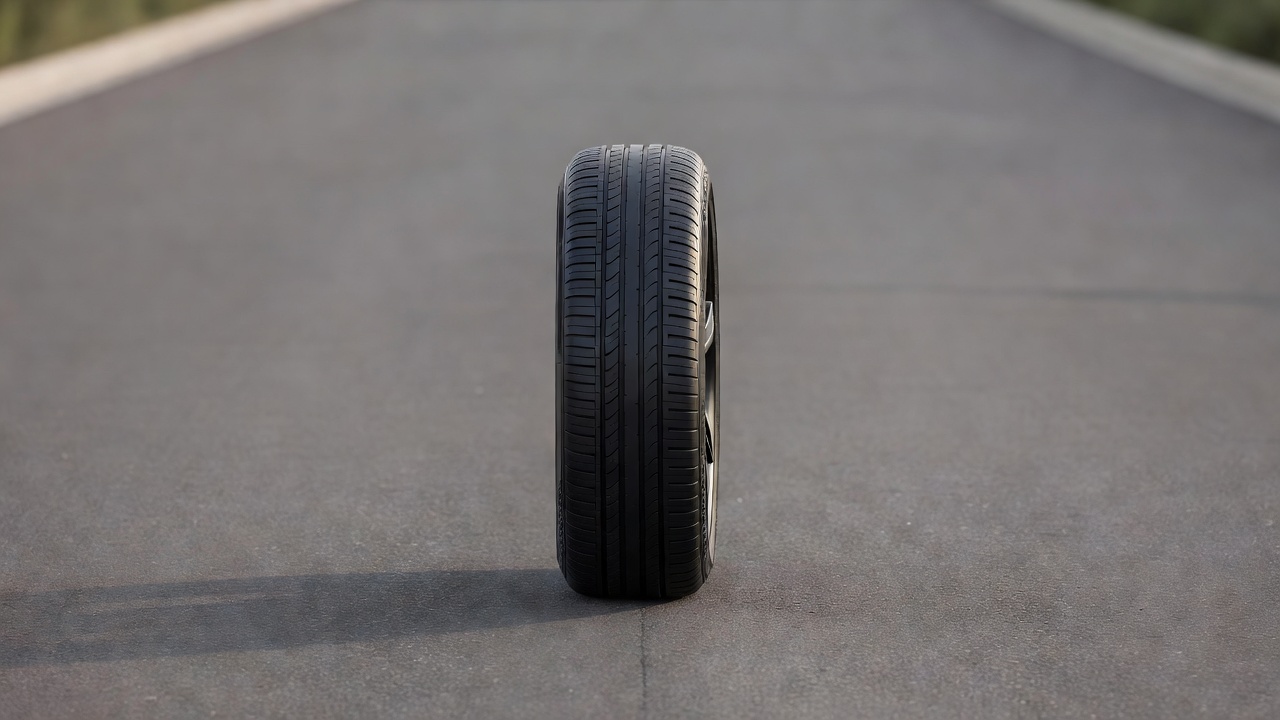
A humming noise when driving is one of the most commonly misdiagnosed faults on a car, because two completely different problems produce a very similar sound. One is a consumable wearing out normally. The other is a component that should be replaced before it fails.
The good news is that you can usually tell them apart yourself, on a quiet road, in under a minute.
The test that separates them
Find a quiet stretch of road where you can hold a steady speed, ideally somewhere the hum is clearly audible, often between 40 and 60 miles an hour. Then make a long, gentle steering input to one side, as though drifting across a wide empty lane, and listen. Do the same the other way.
When you steer, you shift the car's weight onto the outside wheels. A worn wheel bearing is load sensitive: put more weight through it and the noise gets noticeably louder, and it usually gets quieter when the load comes off. So a hum that clearly changes with a gentle left or right input points at a bearing, and the side it gets louder on is generally the opposite side to the one it is loading.
Tyre noise behaves differently. It stays broadly constant through a gentle steering input, because it is coming from the tread pattern meeting the road rather than from a loaded component.
Do this on an empty road at a sensible speed. The point is a slow weight transfer, not a swerve.
If it sounds like the tyres
Tyre hum is normal to a degree. Some tread patterns are simply louder than others, and the EU tyre label carries a noise rating precisely because the difference is real. A car can get noisier just because a new set of tyres has a more aggressive pattern than the old ones.
What is not normal is a hum that has appeared or grown on tyres that used to be quiet. That usually means the tread has worn into an uneven pattern. Two common ones:
- Feathering, where each tread block wears sharper on one edge than the other. Run your palm gently across the tread in both directions; if it feels smooth one way and like a saw the other, that is feathering, and it usually points at alignment.
- Cupping or scalloping, where the tread wears in a wavy pattern of high and low patches around the tyre. That often points at worn dampers letting the wheel bounce.
Both of these make noise that gets steadily worse, and neither is cured by replacing the tyre alone: whatever caused the wear pattern will do it again to the new one.
If it sounds like a bearing
A wheel bearing carries the weight of the car while letting the wheel spin. When it starts to fail it makes a rumbling, droning or grinding sound that rises and falls with road speed rather than engine speed, which is another useful clue: if you knock the car into neutral and coast, a bearing noise carries on unchanged while anything engine or gearbox related changes.
A failing bearing is not a wait-and-see item. As it deteriorates it develops play, which affects how the wheel sits and can eventually let it seize or come loose. It is also often accompanied by a vibration, and on some cars it will trigger the anti-lock braking warning light because the wheel speed sensor sits at the hub.
Replacing one is a routine job for a garage. Leaving it is not routine at all.
Other things that hum
Less commonly, the noise comes from somewhere else entirely, which is worth knowing so you do not spend money on the wrong part.
- A differential or gearbox, which typically changes tone with acceleration and deceleration rather than staying flat.
- A dragging brake pad, which usually adds heat and a smell, and often a pull to one side.
- A roof box, bike rack or damaged underbody panel, which is worth ruling out first because it costs nothing to check.
- Tyres worn very close to the limit, which get audibly louder as the tread depth drops.
Where the noise is coming from, and how to narrow it
Working out which corner is making the noise saves a garage time and saves you money, and there are a couple of ways to get closer than just it is somewhere at the back.
Sound in a cabin is deceptive, so trust the steering test over your ears. If the hum gets louder when you steer gently right, the load has moved onto the left-hand wheels, so a left-side bearing is the likelier candidate. If it gets louder steering left, look right. It is counterintuitive, which is exactly why people get it backwards.
Front and rear is easier. Front bearing noise usually feels like it is coming from ahead of you and often comes with a slight vibration through the steering. Rear bearing noise sits behind you and tends to come through the seat and the floor instead.
If the noise disappears entirely when you lift off the accelerator and returns when you get back on it, that is a different family of faults and points at the drivetrain rather than a bearing or a tyre. Worth mentioning, because it changes what gets checked.
What to do next
Do the steering test and note what you heard. Check your tyre pressures cold against the placard in the door shut. Have a look and a feel across the tread for uneven wear, and note which corner the humming noise when driving seems to come from if you can tell.
Then book it in with those details. A hum that changes with steering and is getting worse should be looked at promptly rather than monitored. A hum that is constant, mild and unchanged since you fitted a new set of tyres is very likely just the tread pattern you bought.
This is a guide to reading the symptom, not a diagnosis of your car. If the noise is loud, worsening, or comes with a vibration or a warning light, get it inspected rather than working through this at the roadside.
Preguntas frecuentes
How long can I drive on a noisy wheel bearing?
There is no safe number of miles to quote, because it depends entirely on how far gone it is. A bearing that has started to hum is already worn, and it will keep deteriorating. Treat a noise that is growing, or one accompanied by vibration or a warning light, as a reason to book it in rather than plan around it.
Can new tyres make my car noisier?
Yes, and it is common. Tread pattern and compound have a large effect on road noise, which is why the EU tyre label includes a noise rating. A quieter set will usually cost a little more, and it is worth checking that rating if cabin noise matters to you.
Why does the noise change when I turn?
Steering shifts the car's weight onto the outside wheels. A worn bearing is load sensitive, so it gets louder when more weight goes through it. Tyre noise comes from the tread meeting the road and stays much more constant, which is what makes the test useful.
Does a humming noise mean I need new tyres?
Not necessarily. If the tread is worn unevenly then new tyres will help, but only if whatever caused the uneven wear is also put right, otherwise the new set wears the same way. If the tread looks even and the noise changes when you steer, tyres are probably not the cause at all.
Lee más como esto
Diagnose it
Burning Smell From Car? What Each One Usually Means
A burning smell from car vents or under the bonnet has a handful of likely causes, and they are not equally urgent. Here is how to tell which one you probably have.
Diagnose it
Car Air Conditioning Not Cold? What That Usually Means
Car air conditioning not cold any more? It rarely breaks suddenly. It fades, and the way it fades tells you whether this is a refrigerant job or something else.
Diagnose it
Car Pulls to One Side? Work Through It in This Order
When a car pulls to one side the causes run cheap to expensive in a predictable order. Here is how to work through them without paying for the wrong one.
¿Necesitas neumáticos o un servicio?
Busca por matrícula o tamaño, compara precios de instalación de especialistas locales, y reserva con el precio bloqueado.
Encuentra neumáticos